

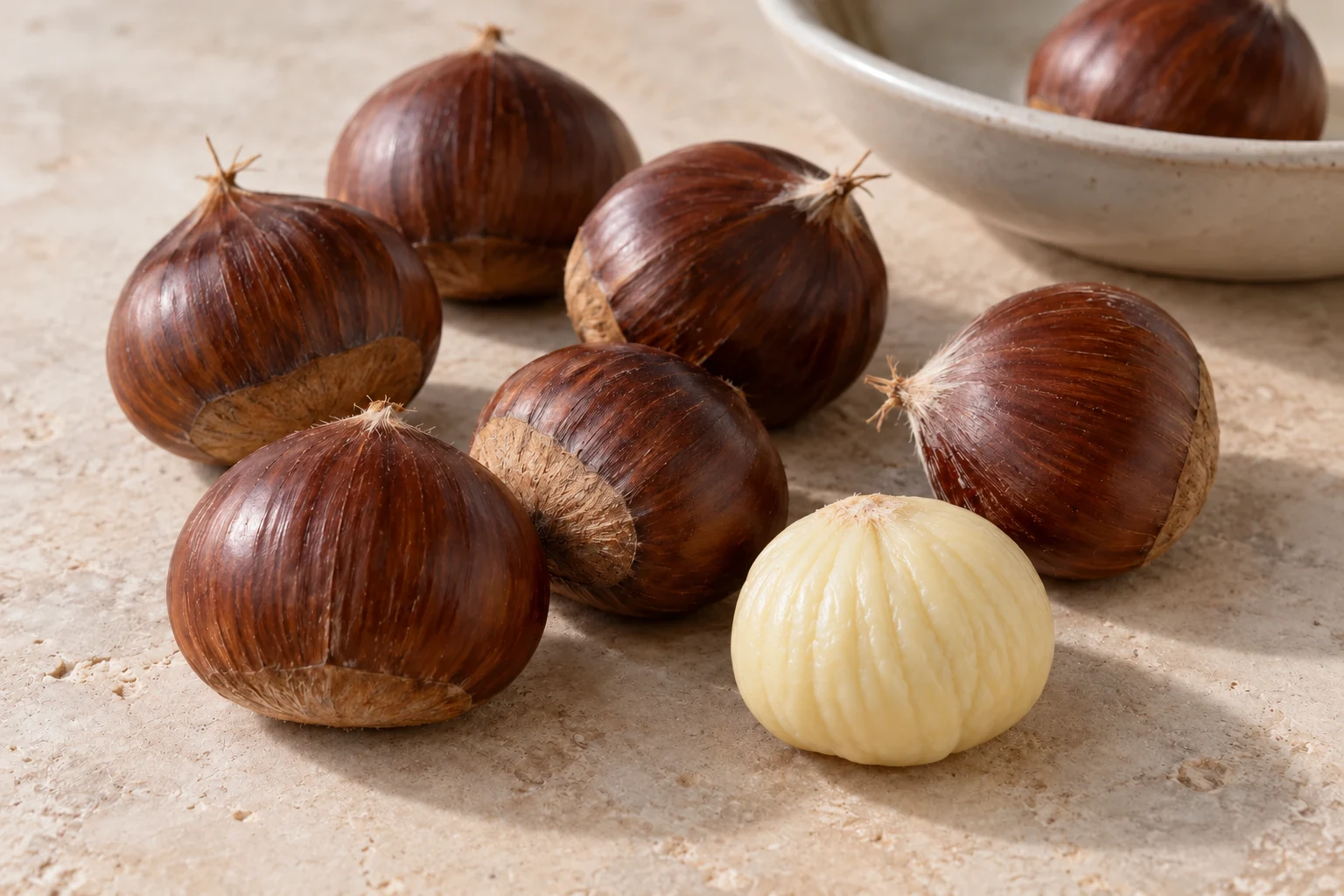
Fresh
- Characteristics
- Whole chestnut in its shell
Castagna di Serino IGP is a sweet, firm-fleshed chestnut from Campania, also protected as Marrone di Serino.
Serino’s chestnuts move from caldarroste to tarts and soups.
The published specification records fresh fruit for boiling, roasting and preserves, while dried chestnuts enter the local preparation called marroni del prete. It also names chestnut tarts and chestnut-and-chocolate desserts on restaurant menus, linking the orchard to both family cooking and pastry.
After harvest, the specification describes sorting and grading the chestnuts. For dried forms, it allows slow-fire drying on racks as well as hot air or ovens; shell removal follows drying for whole shelled kernels. These are production methods, not directions for drying chestnuts at home.
The regional guide places the Serino growing area in defined municipalities of Avellino and Salerno, in the Campanian chestnut country around the Picentini mountains.
CampaniaRoast or boil the chestnuts, or use them in tarts and soups. Try a chestnut soup before moving to a chocolate-and-chestnut dessert.
The regional guide describes fresh Serino chestnuts as medium-large and generally round, often asymmetric, with sweet, firm flesh. Choose the form your recipe needs and check the producer’s label, especially for dried or peeled fruit.
The label carries storage and use directions together with the consumption date. Keep it with the chestnuts and follow it for the form you bought.
The published specification uses both names for the same indication.
Yes. The specification includes fresh, peeled, dried-in-shell and whole dried shelled forms.
No. The source also records boiling, preserves, tarts, soups and the local marroni del prete preparation.
The places, tables and makers we found worth your time. One email, no noise.
One letter a month. Unsubscribe at any time. We never share your address.
