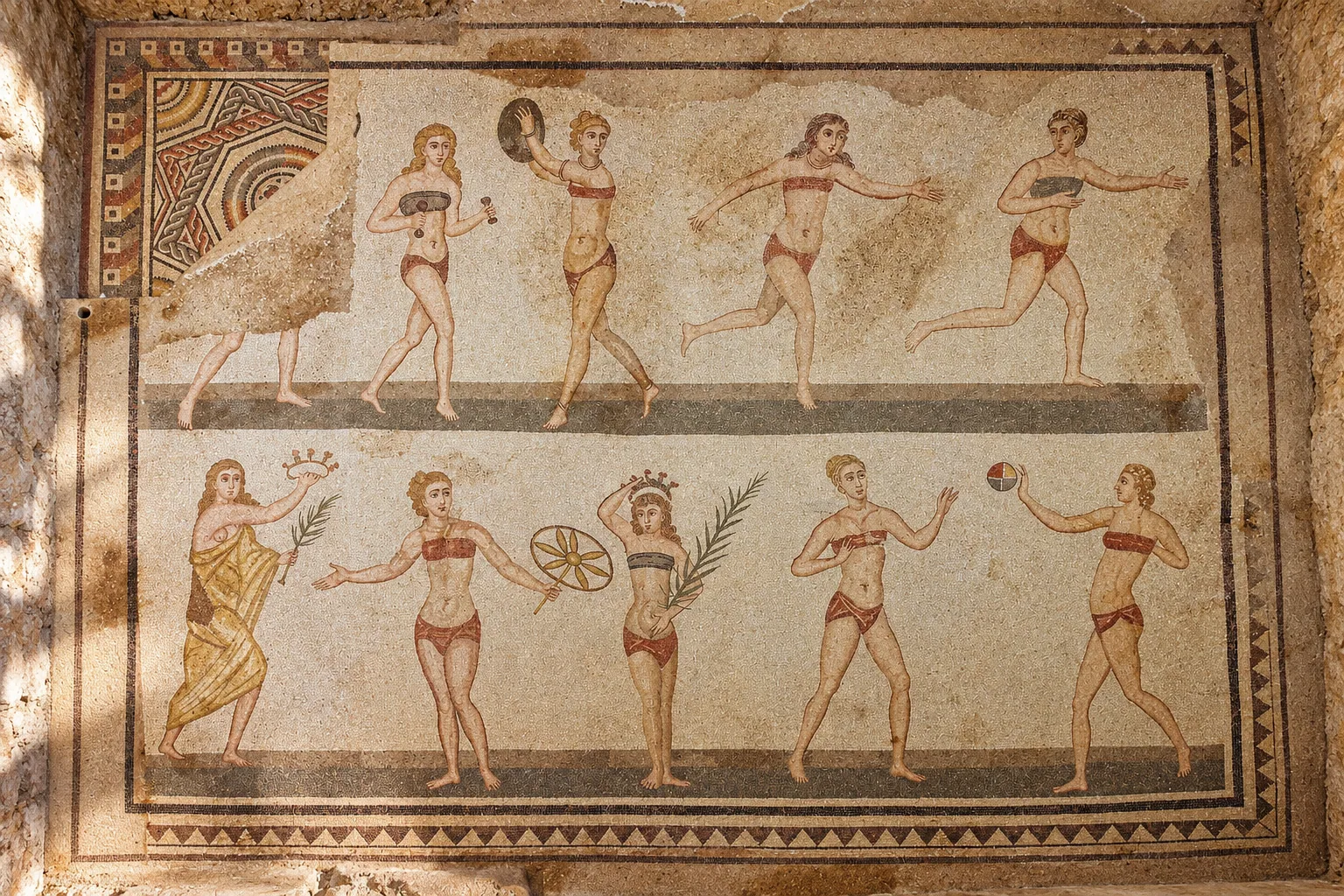
Built in the early fourth century CE on the foundations of an older farmhouse, this was likely the country residence of a wealthy Roman patron overseeing a large agricultural estate, possibly connected to the nearby settlement of Philosophiana along the Catania-Agrigento road.
A medieval landslide, followed by centuries of flooding, buried the villa in mud and protected rather than destroyed it, which is why its mosaic and opus sectile floors, covering some 3,500 square meters, survive as the richest, largest and most varied collection of their kind anywhere. The Great Hunt corridor alone runs about 60 meters, a procession of hunters, exotic beasts and ships capturing animals for the Roman arena, while a smaller, much-photographed room shows ten young women exercising in what look startlingly like modern bikinis. Frescoes once covered interior and even some exterior walls too, an extraordinary decorative scheme that is easy to overlook next to the famous floors underfoot.
Sources and citations (2)
- UNESCO World Heritage CentreVilla Romana del CasaleProperty data and justification for inscriptionRead source
- UNESCO World Heritage CentreDecision 21 COM VIII.C: Villa Romana del CasaleCommittee decision and requestRead source