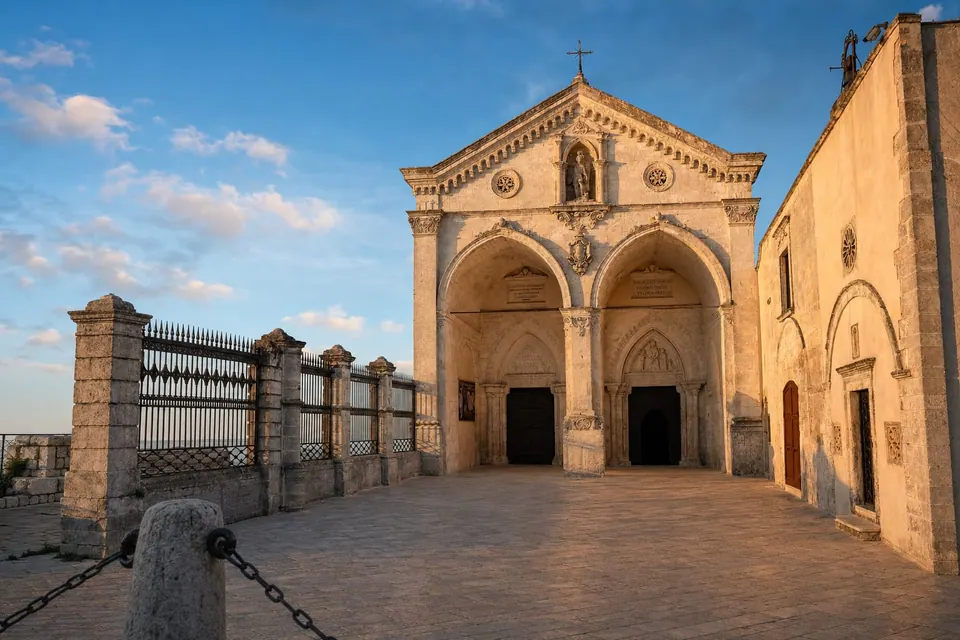
Around 490, tradition holds that the Archangel Michael appeared to the Bishop of Siponto in a cave on Monte Gargano and asked that it be consecrated to Christian worship, and a first sanctuary rose over the grotto by 493, making it the West's oldest shrine to the archangel.
Lombard dukes adopted Michael as a warrior patron soon after, King Rothari was buried nearby in the Basilica di San Giovanni in Tumba, and the site grew into a major stop on the Via Francigena's Via Sacra Langobardorum, drawing popes, Bernard of Clairvaux, Thomas Aquinas and crowned heads down the centuries. Pilgrims descending the long stairway to the grotto still cut their names and crosses into the stone walls, a practice UNESCO recognized in 2011 when it listed the sanctuary among the Longobard places of power.
Sources and citations (4)
- UNESCO World Heritage CentreManagement Plan 2.0 (2022–2027), Sanctuary of San Michele, Monte Sant’AngeloComponent profileRead source
- UNESCO World Heritage CentreLongobards in Italy. Places of the Power (568–774 A.D.), 1318Property record and Outstanding Universal ValueRead source
- Basilica Santuario San Michele ArcangeloL’origine del SantuarioAngevin phaseRead source
- Ministero della CulturaMusei della basilica santuario San Michele ArcangeloMuseum descriptionRead source