Skip to content

Sabbioneta

A Renaissance ideal city built whole by one prince, with a right-angle grid, star walls and Europe's early Teatro all'Antica.

  • Sabbioneta
  • District
Where
Sabbioneta
Best for
Vespasiano Gonzaga's planned Renaissance grid
Allow
2 hr 30 min
Tickets
From €12
Checked September 2026

Sabbioneta exists because one man decided a city could be designed whole, on paper, before a single stone was laid. Vespasiano Gonzaga Colonna, a condottiero and minor prince with outsized ambitions, built it from the 1550s onward as a working demonstration of Renaissance ideal-city theory: a strict right-angle street grid inside star-shaped defensive walls, laid out to reflect humanist ideas about geometry, order and princely virtue rather than growing organically like every other Italian town around it.

The Teatro all'Antica, completed in 1590, was one of Europe's first purpose-built, freestanding theatres modeled on Roman precedent, decades before permanent theatres became common elsewhere. Sabbioneta never grew much beyond Vespasiano's original vision, and that arrested development is exactly why UNESCO paired it with much larger Mantua in 2008: together they show both what an ideal Renaissance city could become and what happened when the prince behind it died without an heir invested enough to expand it.
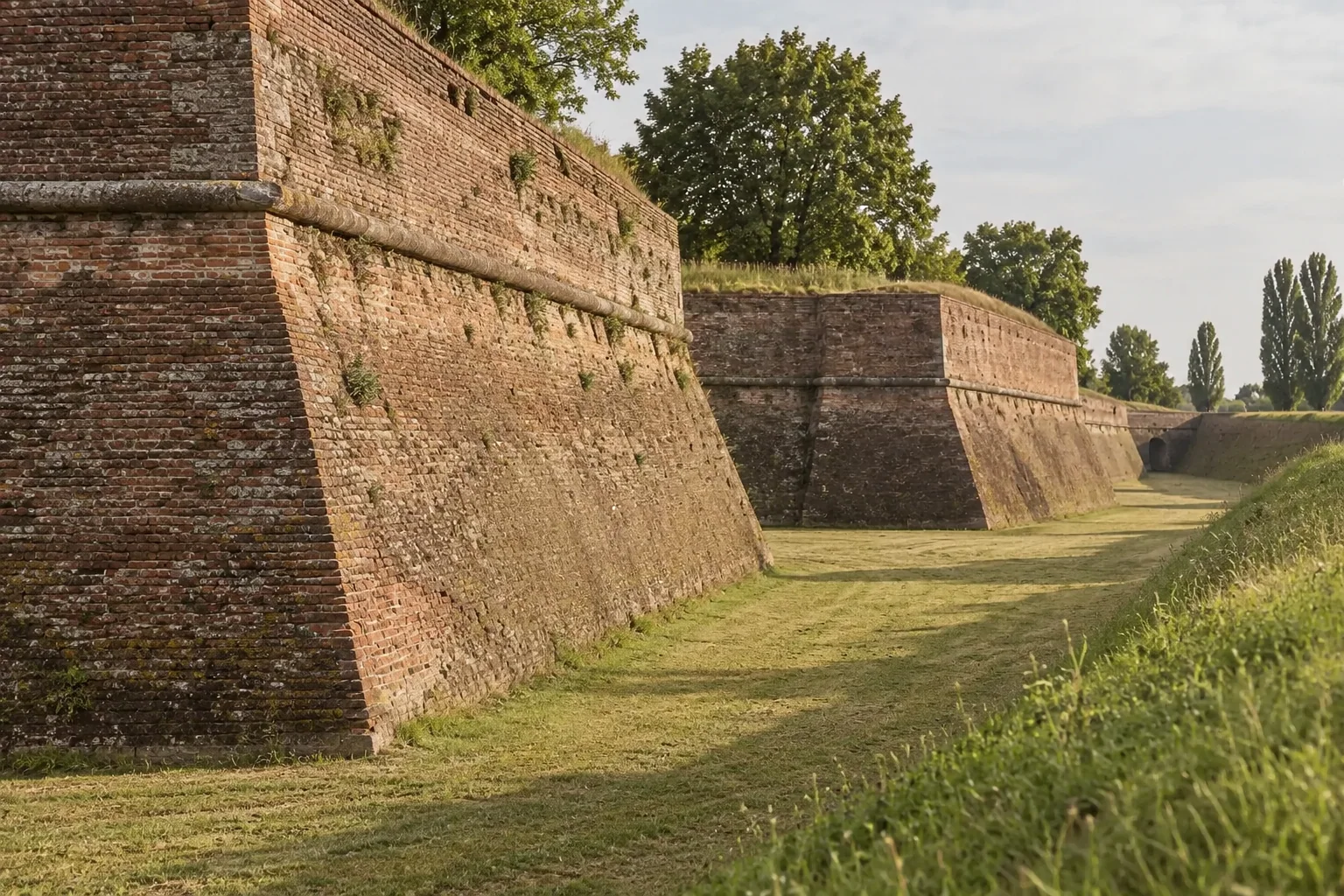
An oblique view along red-brick bastions and the grassy moat at Sabbioneta
Low angular brick ramparts face a broad grassy moat, a clear trace of Sabbioneta’s defensive plan.
Sources and citations (1)
  1. UNESCO World Heritage CentreMantua and SabbionetaDescription and Outstanding Universal ValueRead source
Look closer

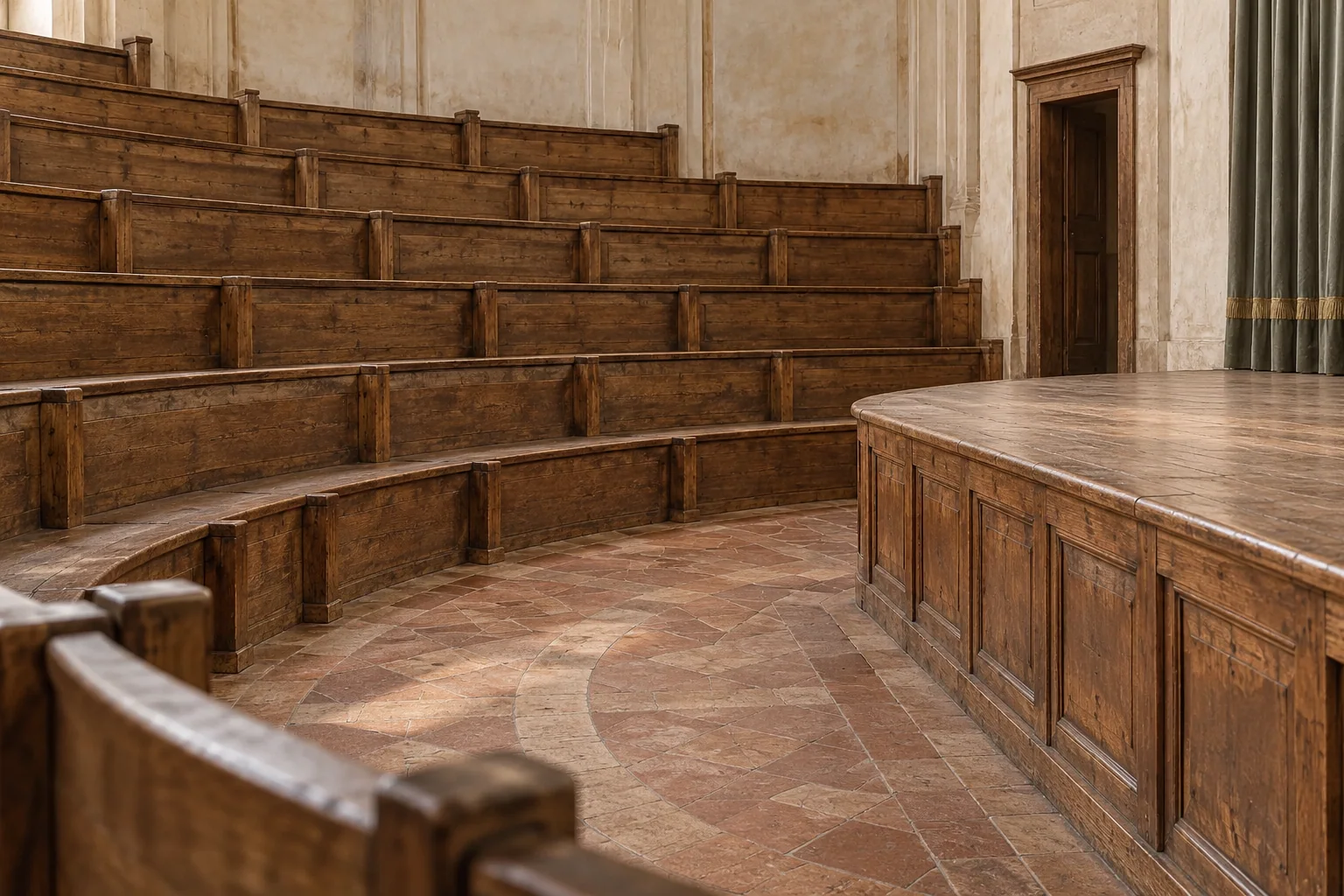
Curving wooden benches draw the eye toward the intimate stage.
The wooden caveaCurving wooden benches draw the eye toward the intimate stage.
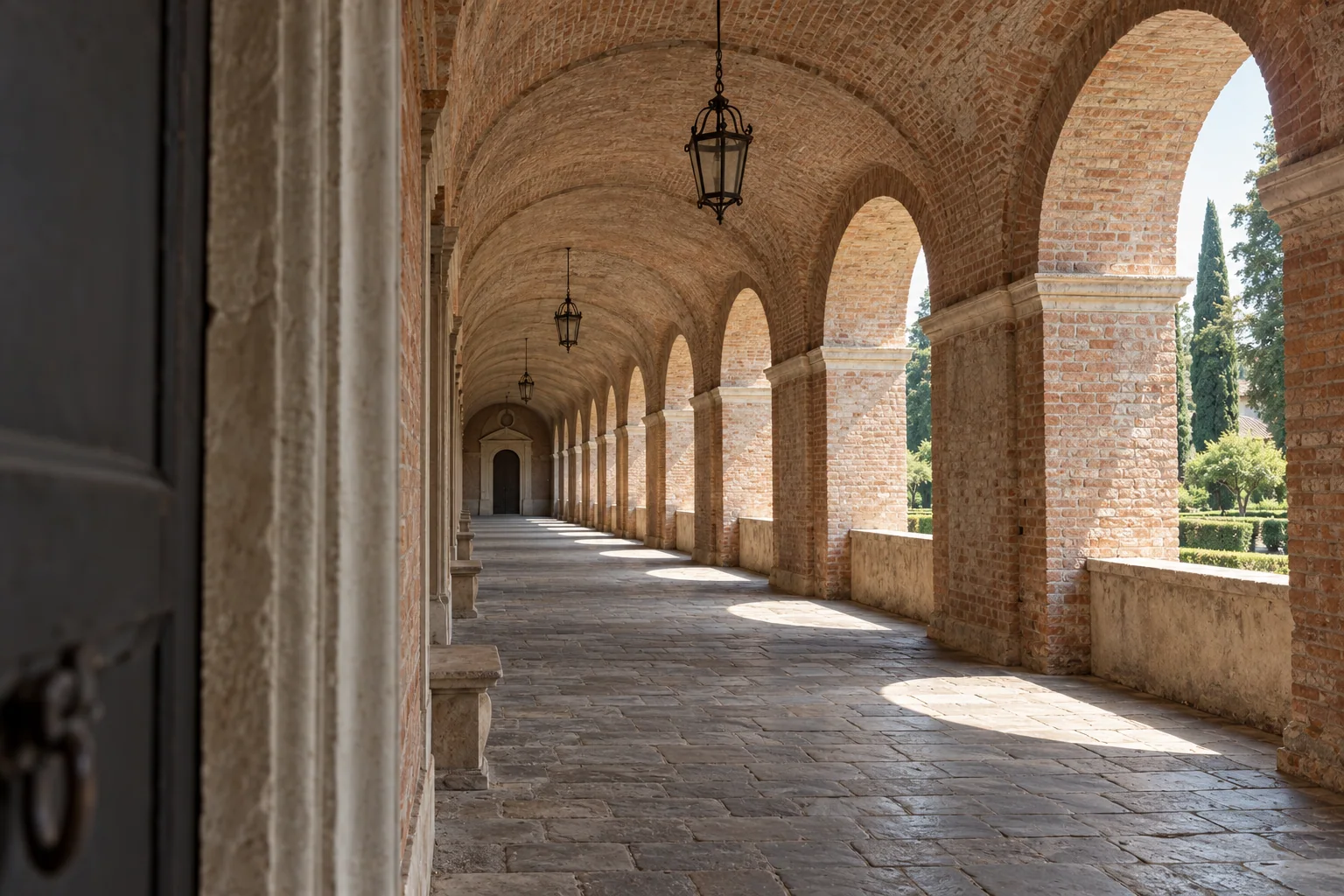
The long brick loggia of the Galleria degli Antichi in Sabbioneta
Galleria degli AntichiA very long brick loggia built for the prince’s collection of ancient marbles.
An angled view of one round arch and plaster pier in the Palazzo Ducale portico at Sabbioneta
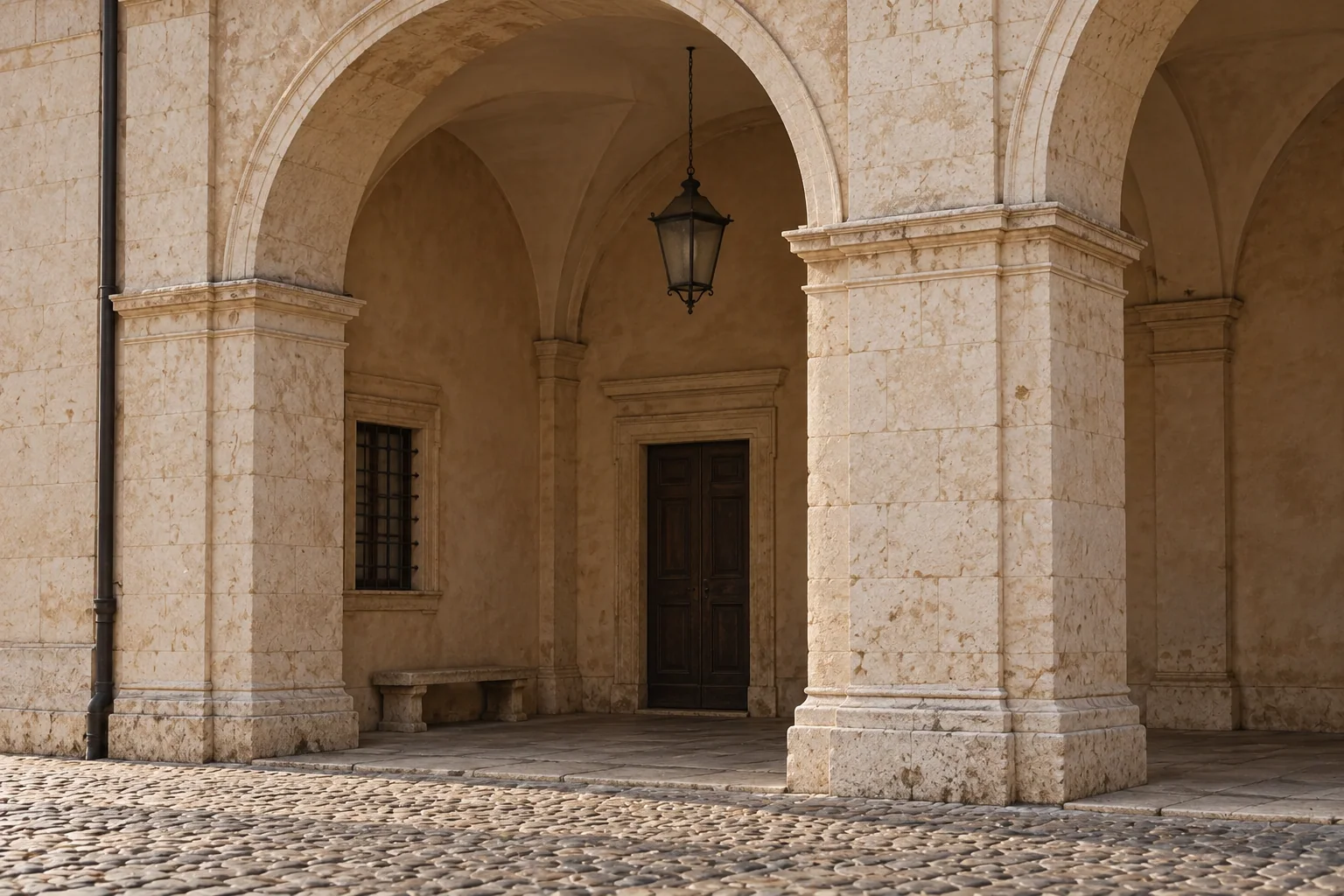
Under the ducal porticoA round arch opens beneath the plain pale facade of Palazzo Ducale.

Five things worth finding

If you see nothing else, see these.

  1. Teatro all’AnticaVincenzo Scamozzi, 1588-1590

    A small, stone theatre modeled on Roman precedent, among the first in modern Europe built as a dedicated theatre.Inside the walled town

  2. Galleria degli Antichi

    A long corridor built for Vespasiano’s collection of ancient marbles; the collection went to Mantua in 1772, but the gallery itself is intact.Next to the Palazzo del Giardino

  3. Palazzo del GiardinoBernardino Campi

    The prince’s pleasure palace, built for leisure, with rooms frescoed by Campi and his collaborators, including the Camerino di Enea.Near the Galleria degli Antichi

  4. Chiesa dell’Incoronata

    An octagonal church that holds the mausoleum of Vespasiano Gonzaga, the founder of the ideal city.Central Sabbioneta

  5. Synagogue and Jewish quarter

    A small synagogue and the street that once held a Hebrew printing press founded by Tobias Foa, a rare survival of this community.In the old Jewish quarter

Plan your visit

Everything you need before you go.

Tickets
From €12
Booking
No booking needed
Time needed
2 hr 30 min
Best time
A weekday morning, when quiet streets let the planned grid feel as deliberate as it was designed.
Getting there
Sabbioneta has no train station; the nearest is Casalmaggiore or Viadana, from where local buses connect, but a car from Mantua is by far the easiest approach.
Accessibility
The planned grid of streets is flat and easy walking; individual monument interiors vary, with some historic staircases not accessible by wheelchair.

Walking the town is free. A cumulative ticket to the main monuments costs about €12 adult; single-monument tickets run about €5 each. Reduced rates apply for ages 13 to 18, groups and over-65s. Last updated September 2026. Prices change, so check the official site before you go.

Book a guided tour of the Teatro all'Antica if one is running; the theatre's illusionistic frescoed architecture rewards an explanation that the empty stage alone does not give away.

Get directionsGoogle MapsApple Maps

Good to know

How long should you spend in Sabbioneta?

Two and a half hours covers the theatre, the Galleria, the Palazzo del Giardino and a walk along the grid streets. The town is tiny, so it is easy to add lunch without a rush.

Do you need to book Sabbioneta?

Wandering the walls and streets needs no booking, but entry to the theatre and palaces often runs on set times or guided tours. Check with the visitor office on arrival, especially on weekdays.

Can you see Sabbioneta and Mantua in one day?

Yes, since they share one UNESCO listing and are close by car. Go to Sabbioneta in the morning, then Mantua in the afternoon for a bigger city.

A letter from Italy, once a month.

The places, tables and makers we found worth your time. One email, no noise.

One letter a month. Unsubscribe at any time. We never share your address.

Help us get it right

What is it about?