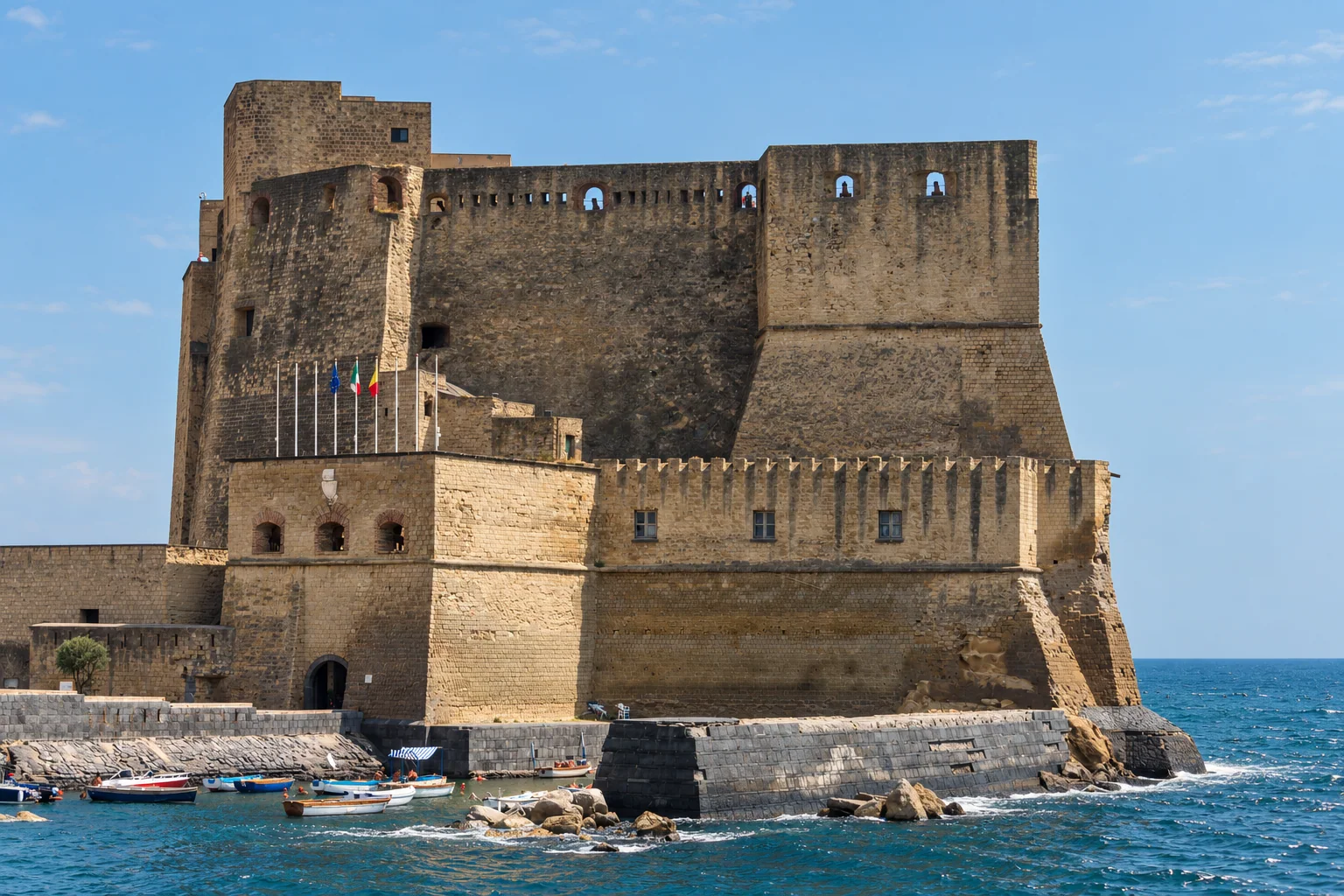
Skip to content

Royal Palace of Naples

Naples' 1600 royal palace on Piazza del Plebiscito, its facade lined with statues of the city's rulers.

  • Naples
  • Palace
Where
Piazza Plebiscito, Naples
Best for
Fontana's facade
Allow
1 hour
Tickets
From €15
Checked October 2026

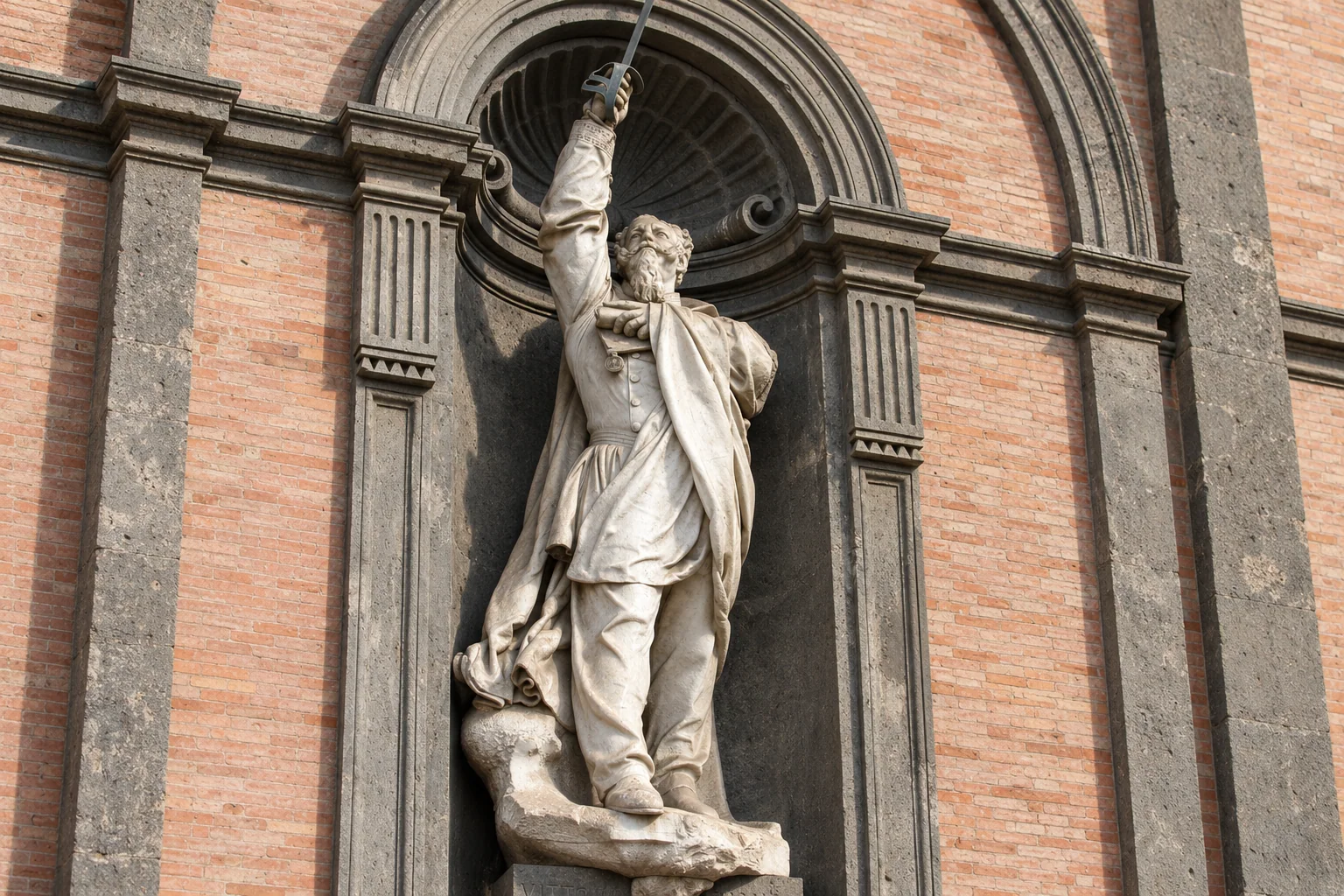
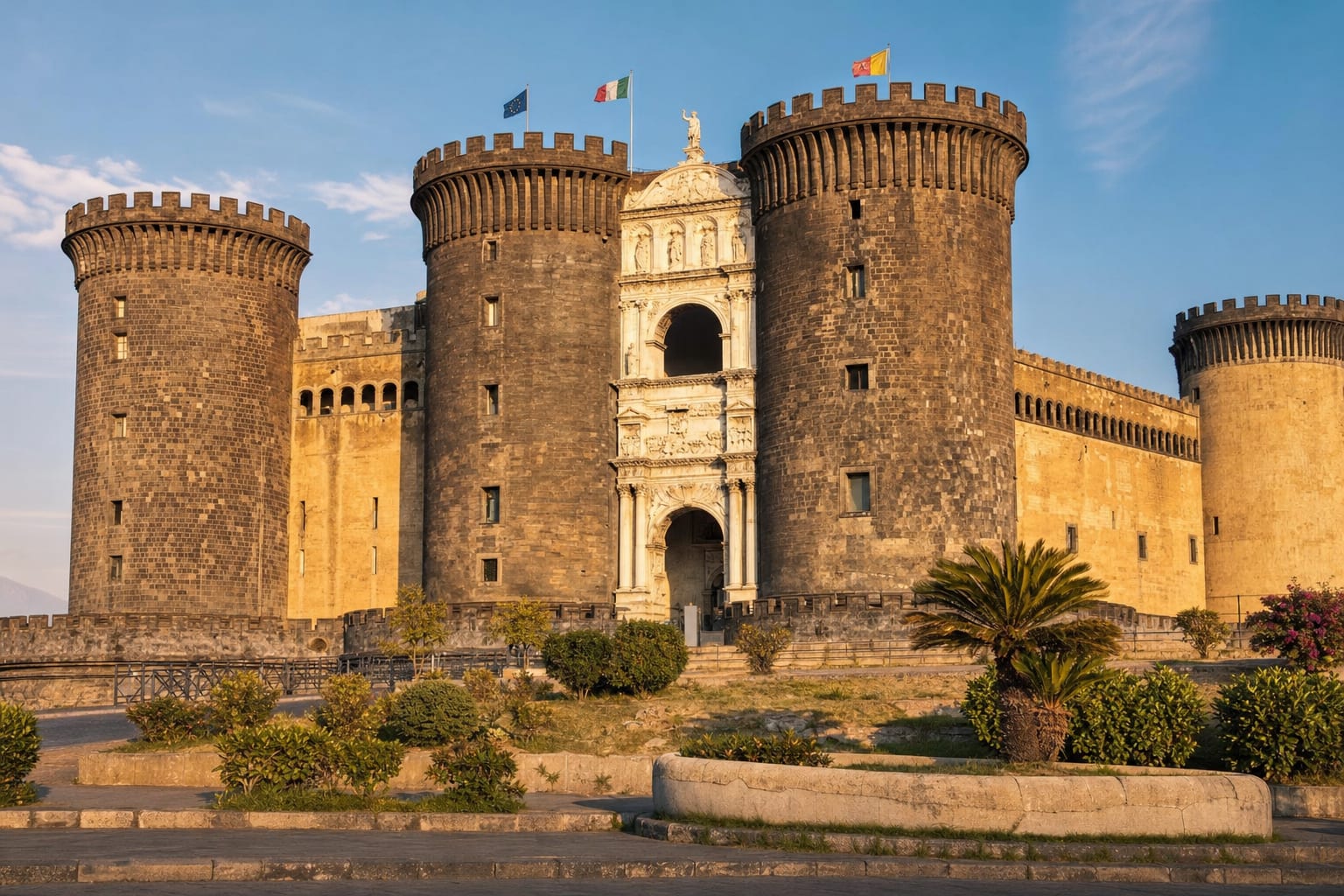
The long gray-and-red façade on Piazza del Plebiscito presents Naples’ history as a line of rulers. Eight statues, commissioned under the House of Savoy, stand in niches that Luigi Vanvitelli created during eighteenth-century consolidation work; they run from Roger the Norman to Victor Emmanuel II. The building itself began in 1600, when viceroy Fernando Ruiz de Castro and vicereine Catarina Zuñiga y Sandoval commissioned Domenico Fontana to create a residence for Philip III of Spain. Its position beside the gardens of Castel Nuovo continued the royal quarter at the edge of the old city.

Inside, the square Courtyard of Honour preserves Fontana’s two-level loggia, with five piperno arches on each side. Look above the arch towards the Staircase of Honour for the Golden Fleece. The marble staircase retains Francesco Antonio Picchiatti’s mid-seventeenth-century design, modelled on Toledo’s Alcázar, beneath the later neoclassical decoration introduced after the 1837 fire. In the State Apartment, the Court Theatre tells a different story: Ferdinando Fuga converted the former Gran Sala for the 1768 wedding of Ferdinand IV and Maria Carolina. Its twelve papier-mâché figures include Apollo, the nine Muses, Minerva and Mercury. Bombing during the Second World War damaged the roof and destroyed the vault’s eighteenth-century decoration, which was later repainted in its original style. The central scene, the Wedding of Poseidon and Amphitrite, is based on Antonio Dominici’s original 1768 painting.

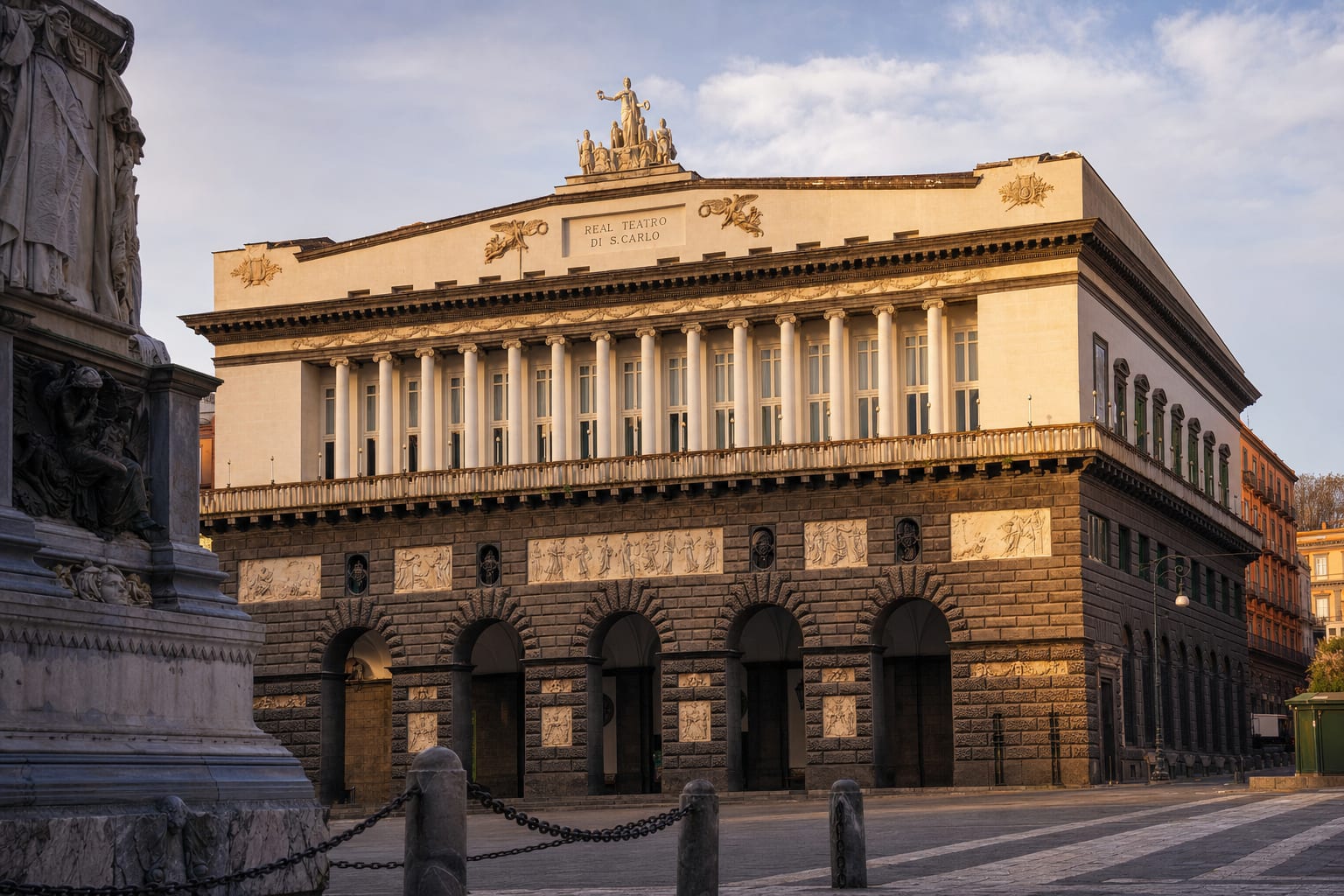
The palace now brings together the museum, the National Library of Naples and the neighbouring Teatro di San Carlo. Start with the Museum of the Factory for architectural models and the story of the building’s transformations, then allow about an hour for the State Apartment, with extra time for the Caruso Museum or Hanging Garden. The garden has its own ticket supplement and guided arrangements; check the official visitor information before choosing your route.

A Habsburg viceregal foundation later expanded as a Bourbon royal residence; a state cultural institution since 1919.
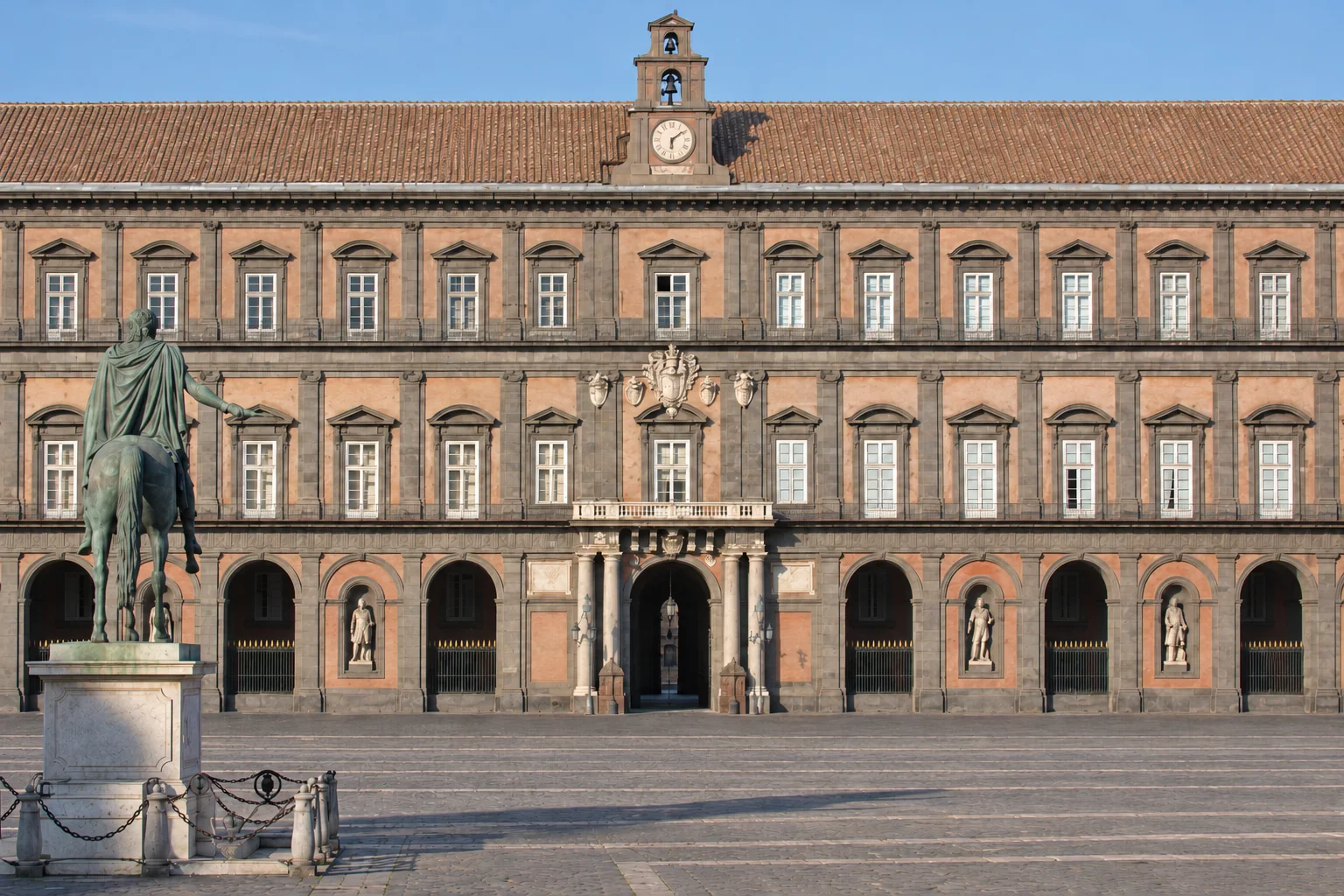
The Royal Palace’s long red-and-gray façade, with its repeated windows and ground-floor arcade, seen from Piazza del Plebiscito.
The long façade of Palazzo Reale faces Piazza del Plebiscito.
Sources and citations (9)
  1. Palazzo Reale di NapoliVisitor informationaddress and directions, lines 8–12; tickets, lines 54–64 and 77–83; duration, purchase without reservation and visitor cautions, lines 108–121; accessibility, lines 130–143Read source
  2. Palazzo Reale di NapoliVisitor Information - Palazzo Reale di Napolivisitor address and map, lines 8–12; tickets, lines 22–32; garden add-on, lines 45–50; no-reservation and average duration, lines 76–89; accessibility, lines 98–111Read source
  3. Palazzo Reale di NapoliHanging Garden - Palazzo Reale di Napoliopening description: garden history/current layout/materials/2018 restoration; Guided Tours section: dedicated ticket and separate routeRead source
  4. Palazzo Reale di NapoliLe Sculture - Palazzo Reale di Napolidescription lines 4–9: eight rulers, Savoy commission, Vanvitelli niches, Fortune and interior statuesRead source
  5. Palazzo Reale di NapoliStaircase of Honour - Palazzo Reale di Napolidescription lines 4–7: Picchiatti, Toledo Alcázar, marble, Genovese restoration and vault symbolsRead source
  6. Palazzo Reale di NapoliCourt Theater - Palazzo Reale di Napolidescription lines 6–10: Gran Sala, Fuga, 1768 wedding, figures, acoustics and ceiling sceneRead source
  7. Palazzo Reale di NapoliCourtyard of Honour - Palazzo Reale di Napolidescription lines 10–14: founding, architect, shape/material, heraldry, Golden Fleece and fountainRead source
  8. Palazzo Reale di NapoliPalazzo Reale - Palazzo Reale di Napolioverview lines 10–15: facade and current museum/cultural institutions including National LibraryRead source
  9. Regione CampaniaPalazzo Reale di Napoli - Ecosistema digitale per la cultura della Regione Campaniaentry lines 83–89: foundation, viceroy/Philip III, Fontana, layout, expansions, library and museum functionsRead source
Look closer

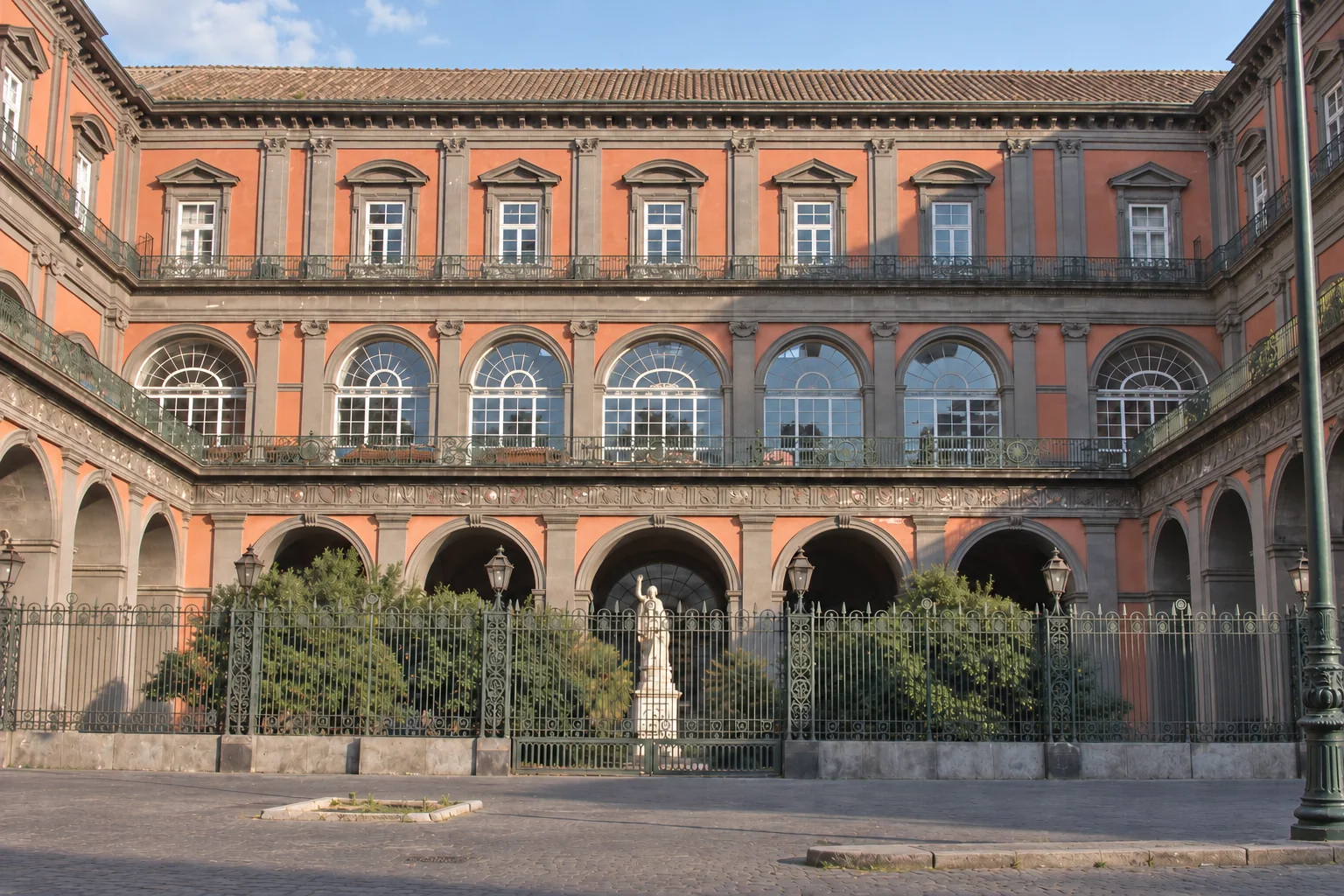
The side courtyard on the Galleria Umberto I side, with an arcade below upper arched windows and a small garden sculpture.
The side courtyard and entrance at Palazzo RealeA side courtyard at Palazzo Reale, with arched openings, red-toned wall fields and dark stone detailing.
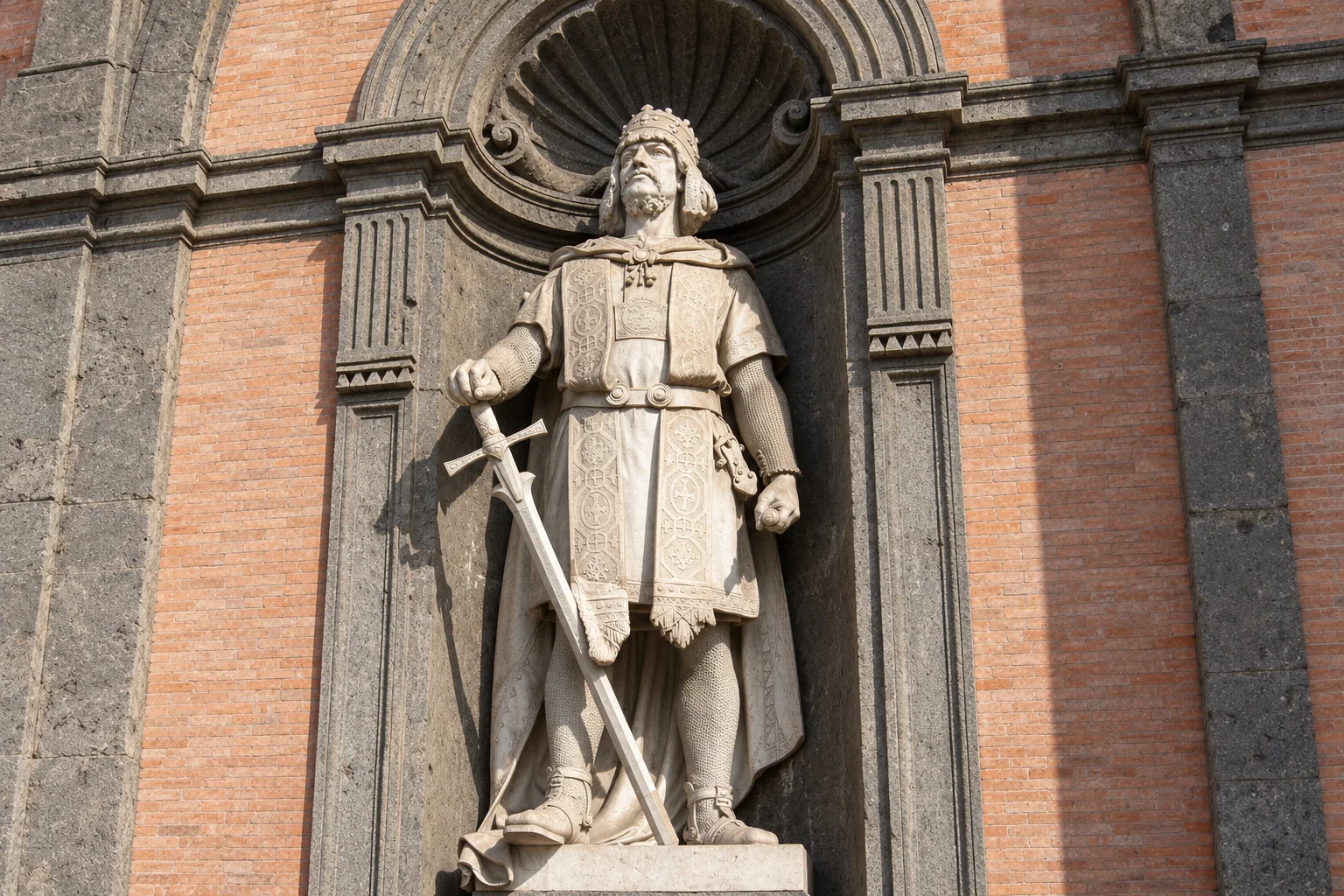
A crowned, bearded ruler statue holding a lowered sword inside a dark stone niche set in red brick.
A ruler statue in a niche on Palazzo Reale’s façadeA full-length ruler statue stands within a rounded niche on the palace façade.
A full-length statue with one arm raised holding a sword, set in a rounded niche framed in dark stone and red brick.
Victor Emmanuel II in a niche on the palace façadeThe façade statue identified as Victor Emmanuel II, shown with sword raised inside a rounded niche.

Five works worth finding

If you see nothing else, see these.

  1. The Staircase of HonourFrancesco Antonio Picchiatti

    This marble staircase follows Picchiatti’s mid-17th-century design, modelled on Toledo’s Alcázar. Above the courtyard arch, look for the carved Golden Fleece.Between the Courtyard of Honour and the State Apartment

  2. The Court TheatreFerdinando Fuga · 1768

    Fuga transformed the former Gran Sala into a permanent theatre for the 1768 wedding of Ferdinand IV and Maria Carolina. Its niches contain twelve papier-mâché figures: Apollo, the nine Muses, Minerva and Mercury.Within the State Apartment

  3. The eight rulers on the facade

    The statues represent rulers of Naples from Roger the Norman to Victor Emmanuel II. Vanvitelli created their facade niches during 18th-century consolidation work.Piazza del Plebiscito facade

  4. Courtyard of HonourDomenico Fontana · 1600

    The square courtyard has a two-level loggia with five piperno arches on each side. The Fortune statue was made for the Molo Grande fountain and moved here in the mid-19th century.Oldest part of the palace

  5. The Hanging GardenGaetano Genovese

    Two rows of rectangular beds flank a path beneath a metal pergola. At the center, alternating Carrara and Bardiglio Imperiale paving surrounds a neoclassical Carrara marble table-fountain. A separate ticket is required.Upper terrace

Plan your visit

Everything you need before you go.

Tickets
From €15
Booking
No booking needed
Time needed
1 hour
Best time
Choose a day when you can leave time beyond the State Apartment’s one-hour average. Check the operator’s current schedules for each museum; severe-weather alerts can affect the Hanging Garden, so confirm its availability before adding it to your visit.
Getting there
The official visitor address is Piazza Plebiscito 1, Naples. Use the palace’s directions link or museum map for a current route.
Accessibility
For visitors with mobility disabilities, the museum says it has removed architectural barriers that could limit independent movement. The main museum floor is step-free, lifts serve the museum level and Hanging Garden, and accessible toilets are available. Wheelchairs and LIS videos are available in the DAI Room; tactile visits for blind and low-vision visitors must be arranged in advance with the museum’s Educational Services. Contact the museum to confirm the route and services you need; the operator notes that some State Apartment rooms may be temporarily inaccessible.

The standard €15 ticket includes the State Apartment, Caruso Museum, Museum of the Factory and temporary exhibitions. Visitors under 18 enter free; the operator lists a €2 reduced ticket for eligible EU visitors aged 18–24. Individual visitors can buy ordinary tickets through the official Musei Italiani portal or app, or at the palace ticket desk or kiosk, without advance reservation. Unguided access to the Hanging Garden costs an additional €2 with the palace ticket; guided access is a separate route with a dedicated ticket, so check the operator’s current visitor information for its terms. Last updated October 2026. Prices change, so check the official site before you go.

In the Court Theatre, look up at the central ceiling scene: it depicts the Wedding of Poseidon and Amphitrite, based on Antonio Dominici’s original 1768 painting.

Get directionsGoogle MapsApple Maps

Piazza Plebiscito, 1, Napoli

Tours worth booking

A few we would book ourselves, to get more from your visit.

Booking through these links may earn Italia Magnifica a commission, at no cost to you.

    • Viator
    • 2h 30m
    • 5.0★ · 14 reviews
    • Viator
    • 2h
    • 5.0★ · 8 reviews
    • Viator
    • 2h
    • 5.0★ · 6 reviews
    • Viator
    • 3h 30m
    • 5.0★ · 6 reviews
    • Viator
    • 2h 30m
    • 5.0★ · 5 reviews
    • Viator
    • 4h
    • 5.0★ · 4 reviews

Good to know

How long should I allow for the Royal Palace?

The museum gives about one hour as the average visit time for the State Apartment. Allow more time if you also plan to see the Caruso Museum, Museum of the Factory or Hanging Garden.

Do I need to book an ordinary palace ticket in advance?

For individual visitors, no advance reservation is required for an ordinary palace ticket. Buy through the official Musei Italiani portal or app, or at the palace desk or kiosk.

Is the Hanging Garden included in the palace ticket?

No. Unguided access costs an additional €2 with the palace ticket. Guided visits are a separate route with a dedicated ticket; check the operator’s current visitor information for details.

A letter from Italy, once a month.

The places, tables and makers we found worth your time. One email, no noise.

One letter a month. Unsubscribe at any time. We never share your address.

Help us get it right

What is it about?