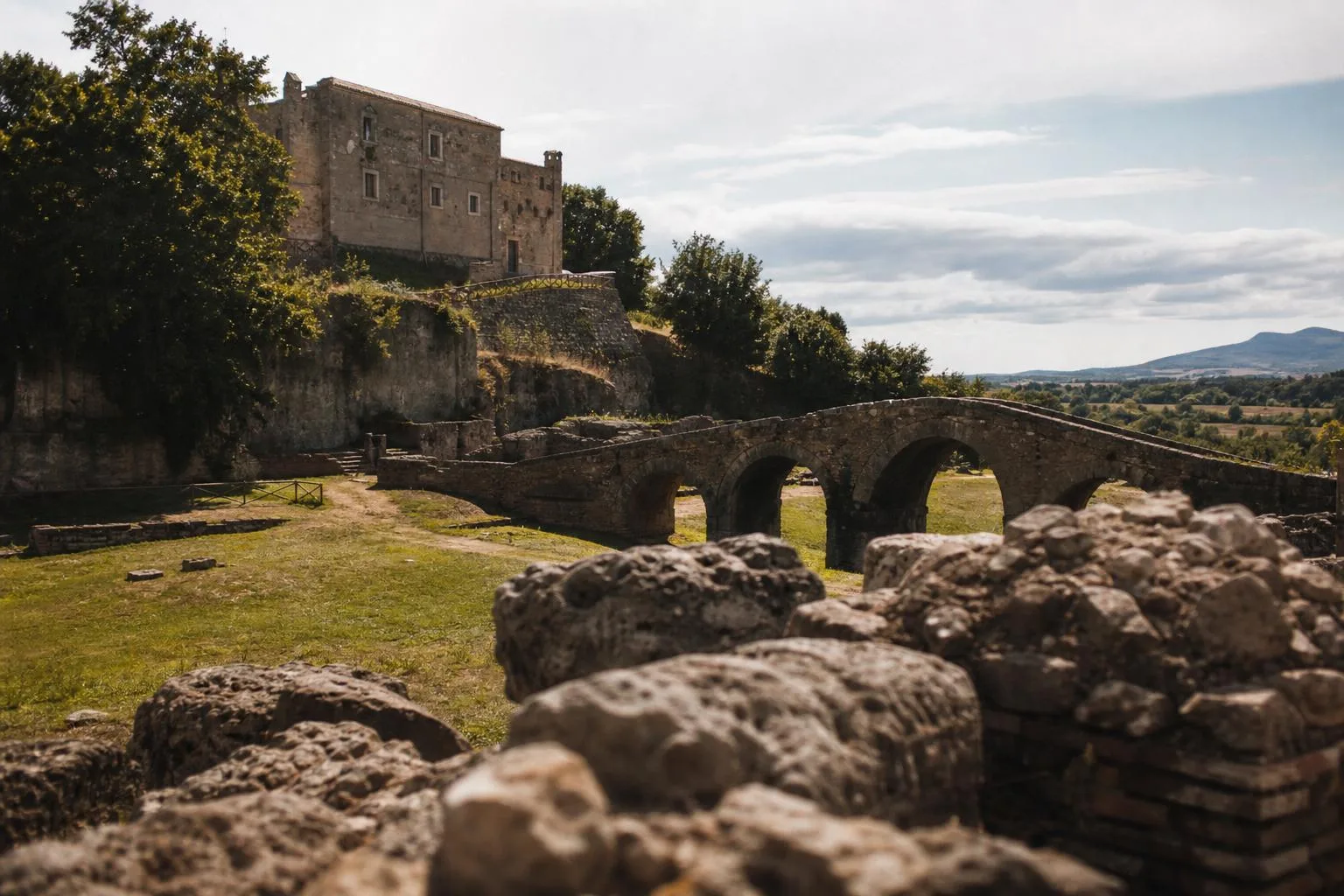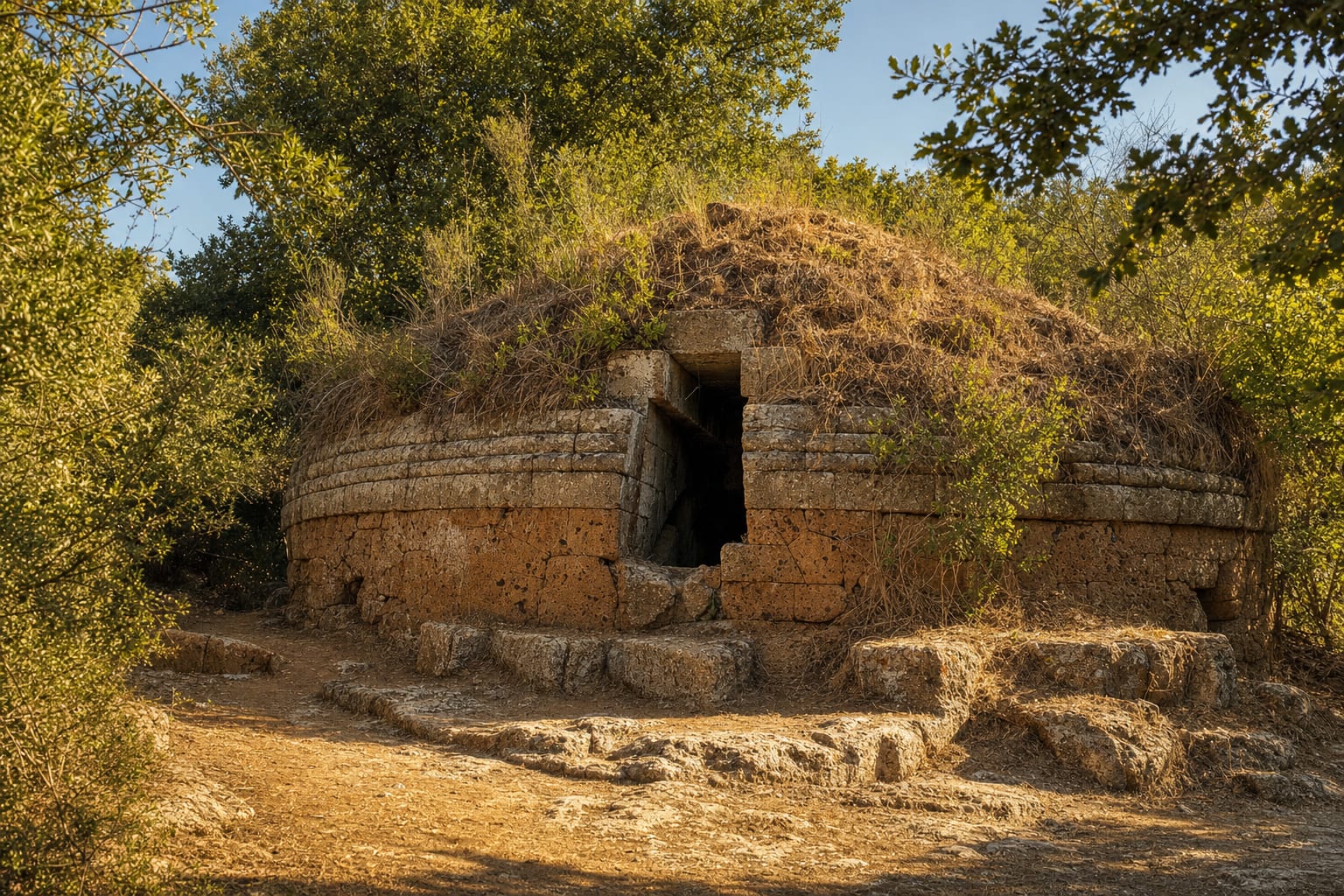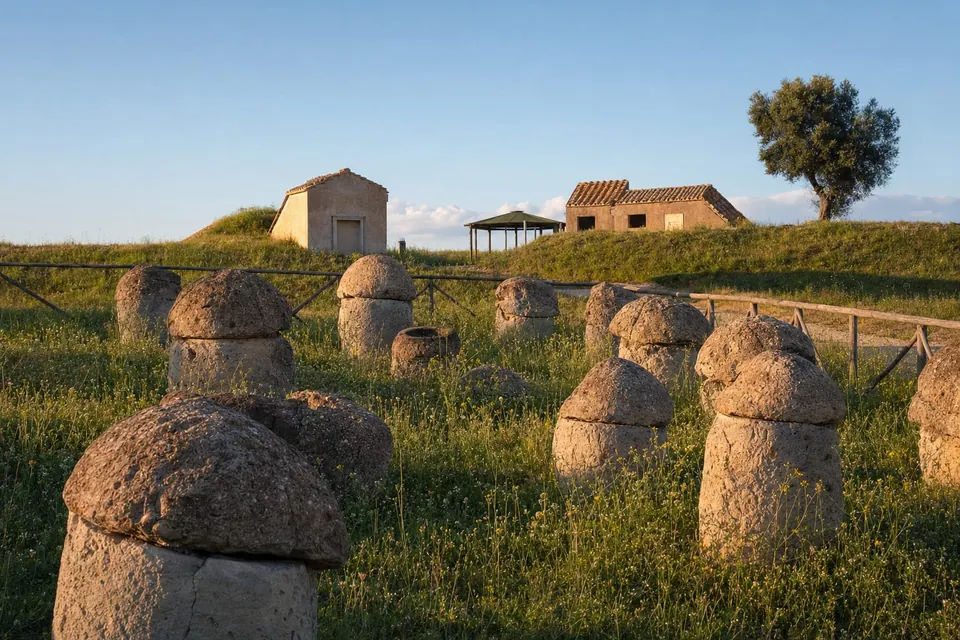
Beneath the plateau outside Tarquinia, some 6,000 Etruscan graves spread across a burial ground that opens a rare window on how a vanished people wanted to be remembered. Around 200 chambers, cut from the seventh century BC through Roman times, were painted with banquets, dancers, hunters and mourners in colors still vivid after millennia underground, among them the celebrated Tomb of the Leopards and the Tomb of Hunting and Fishing.
UNESCO listed the necropolis alongside Cerveteri's Banditaccia in 2004, judging the frescoes a unique record of Etruscan daily life found nowhere else in such quantity. Many of the finest artifacts unearthed here now sit in the Tarquinia National Museum in town, a natural second stop after the tombs.