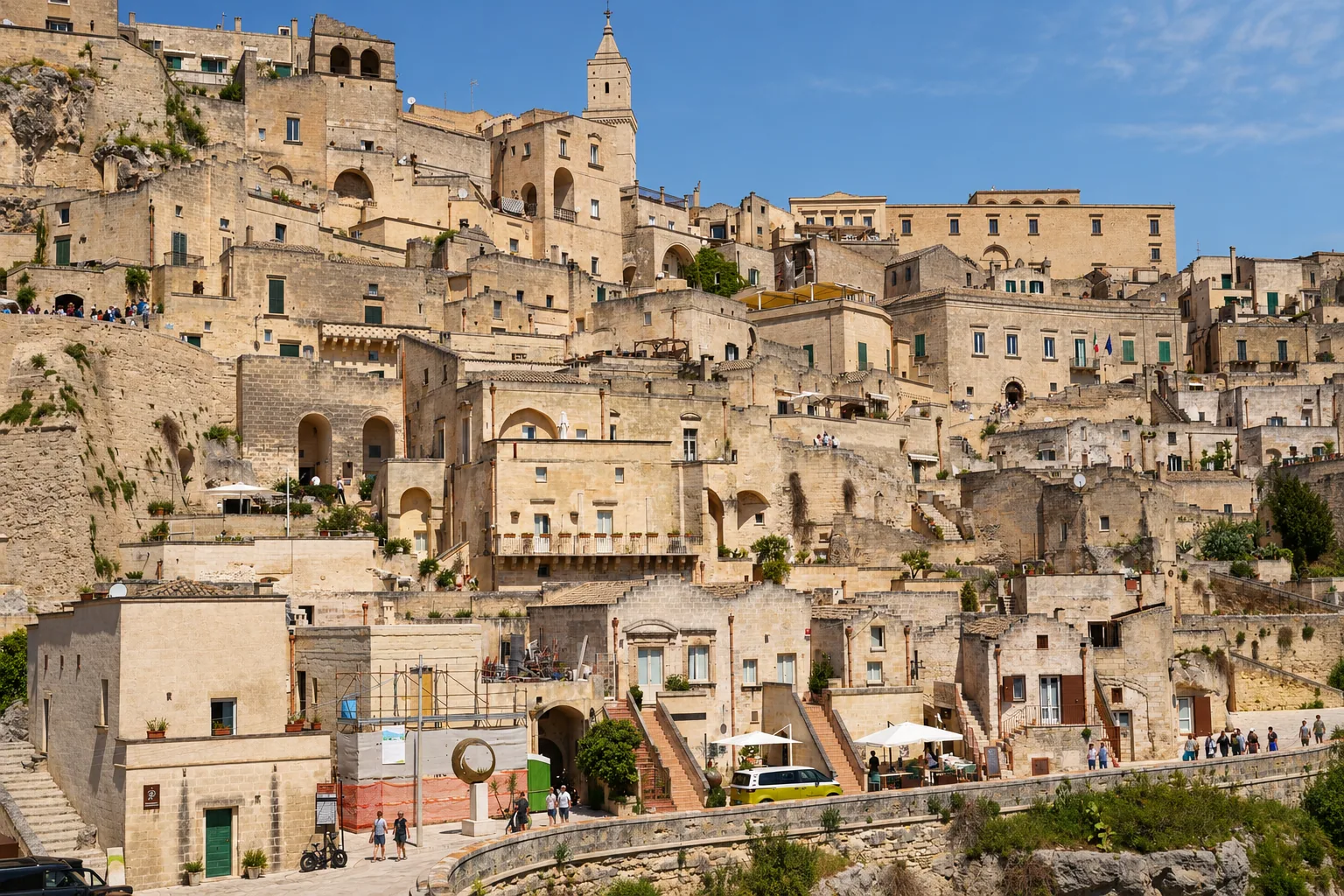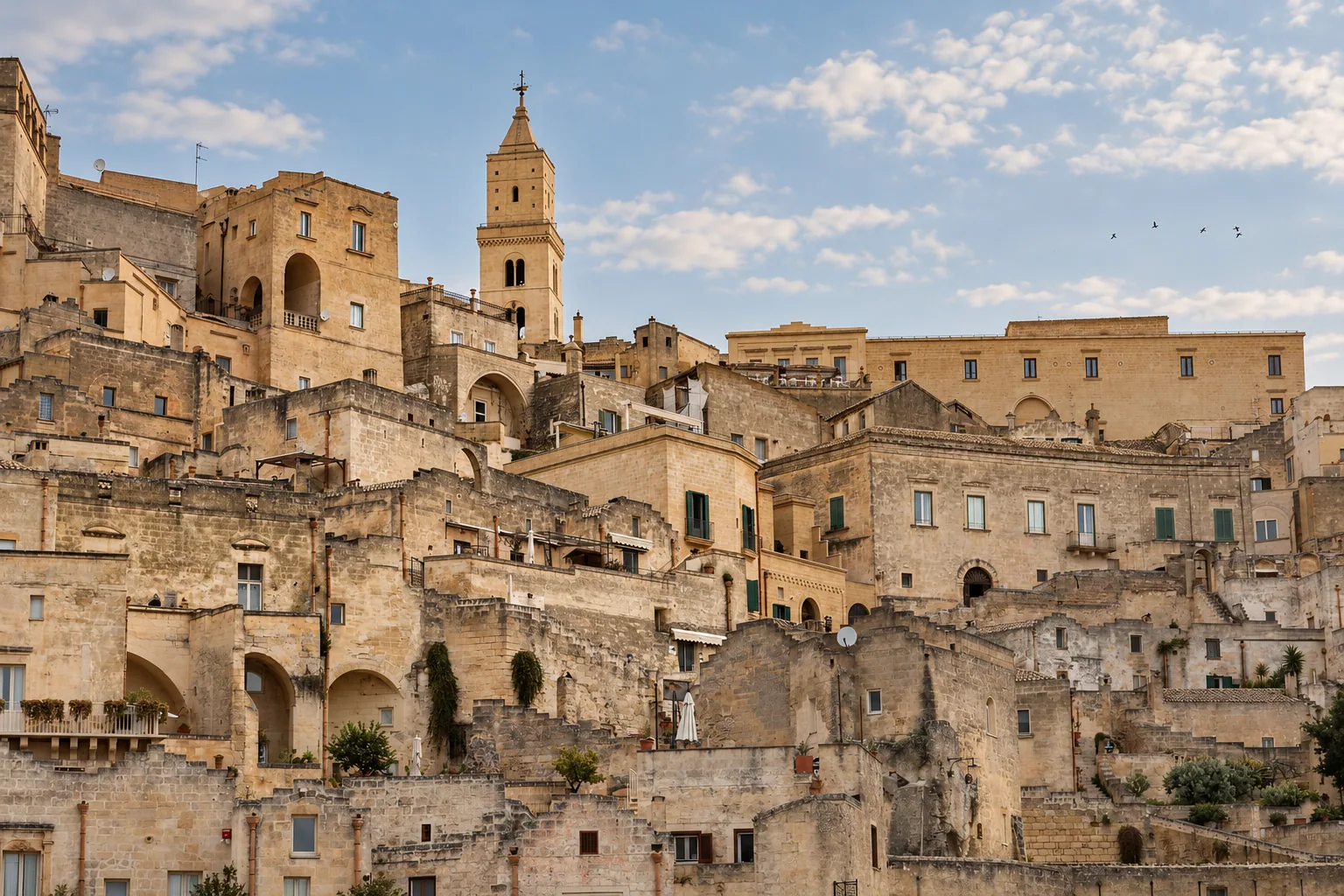
Matera raised its cathedral between 1230 and 1270 on the spur of the Civita, the rock that splits the city's two Sassi ravines. The facade keeps its Apulian Romanesque bones: a rose window, carved capitals, a slim bell tower visible for miles across the ravines.
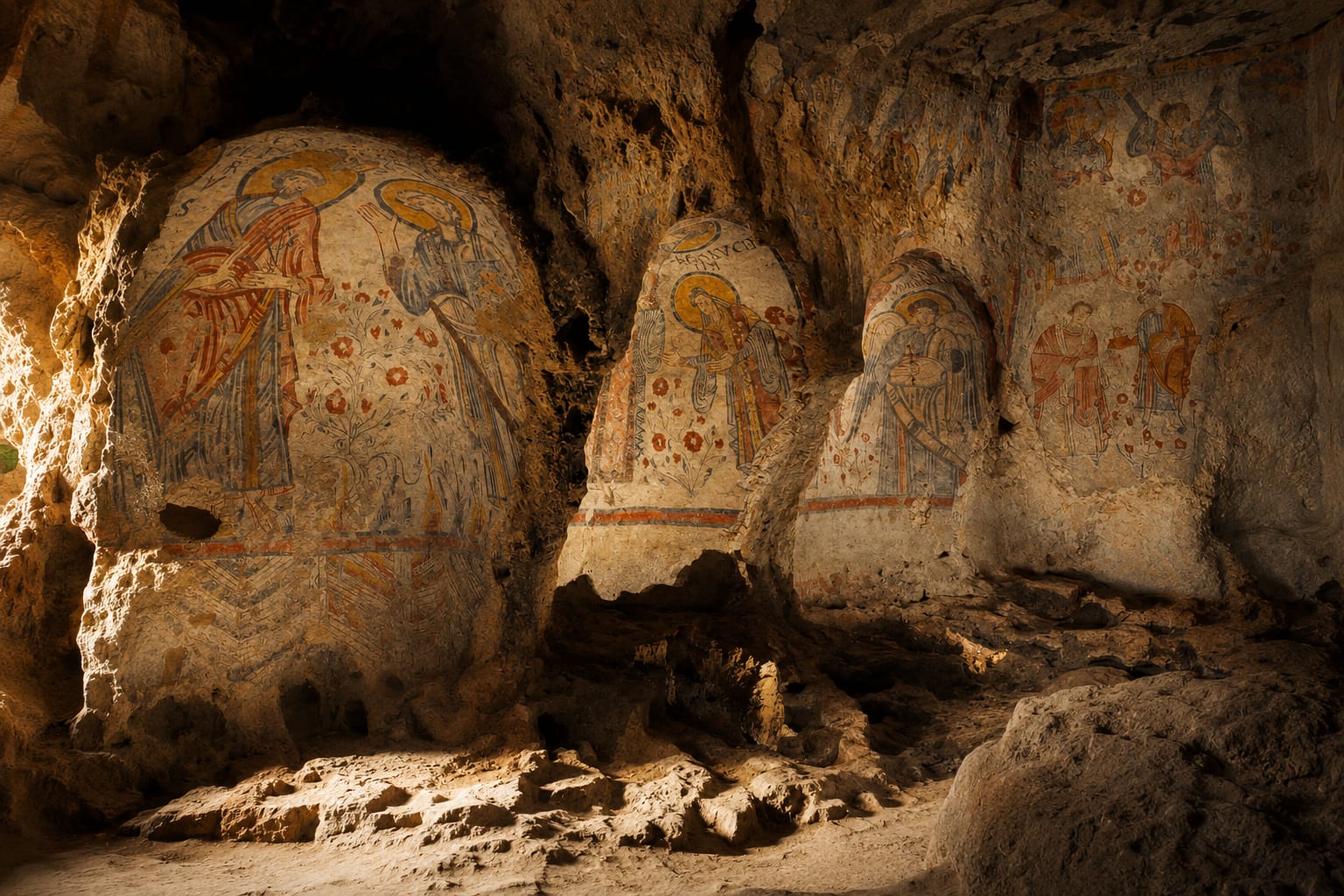
Inside, a seventeenth century remodeling covered much of the nave in gilded stucco, though older layers survive alongside it: a wooden choir carved in 1453 with sixty stalls, and a stone nativity scene that sculptors Altobello Persio and Sannazzaro di Alessano carved between 1530 and 1534. Look too for the thirteenth century fresco of the Madonna della Bruna, Matera's patron saint, whose image gave the cathedral its second dedication and still lends her name to the city's July feast. The cathedral sits inside the Sassi's UNESCO-listed old town but is counted as a separate site in its own right.
Sources and citations (3)
- Chiesa di Matera-IrsinaCenni storiciDiocesan history and current archdiocesan identityRead source
- Ministero della CulturaChiesa Cattedrale di MateraConstruction context and 1270 completionRead source
- UNESCO World Heritage CentreThe Sassi and the Park of the Rupestrian Churches of MateraProperty scopeRead source