Skip to content

Collegiate Church of Sant'Orso

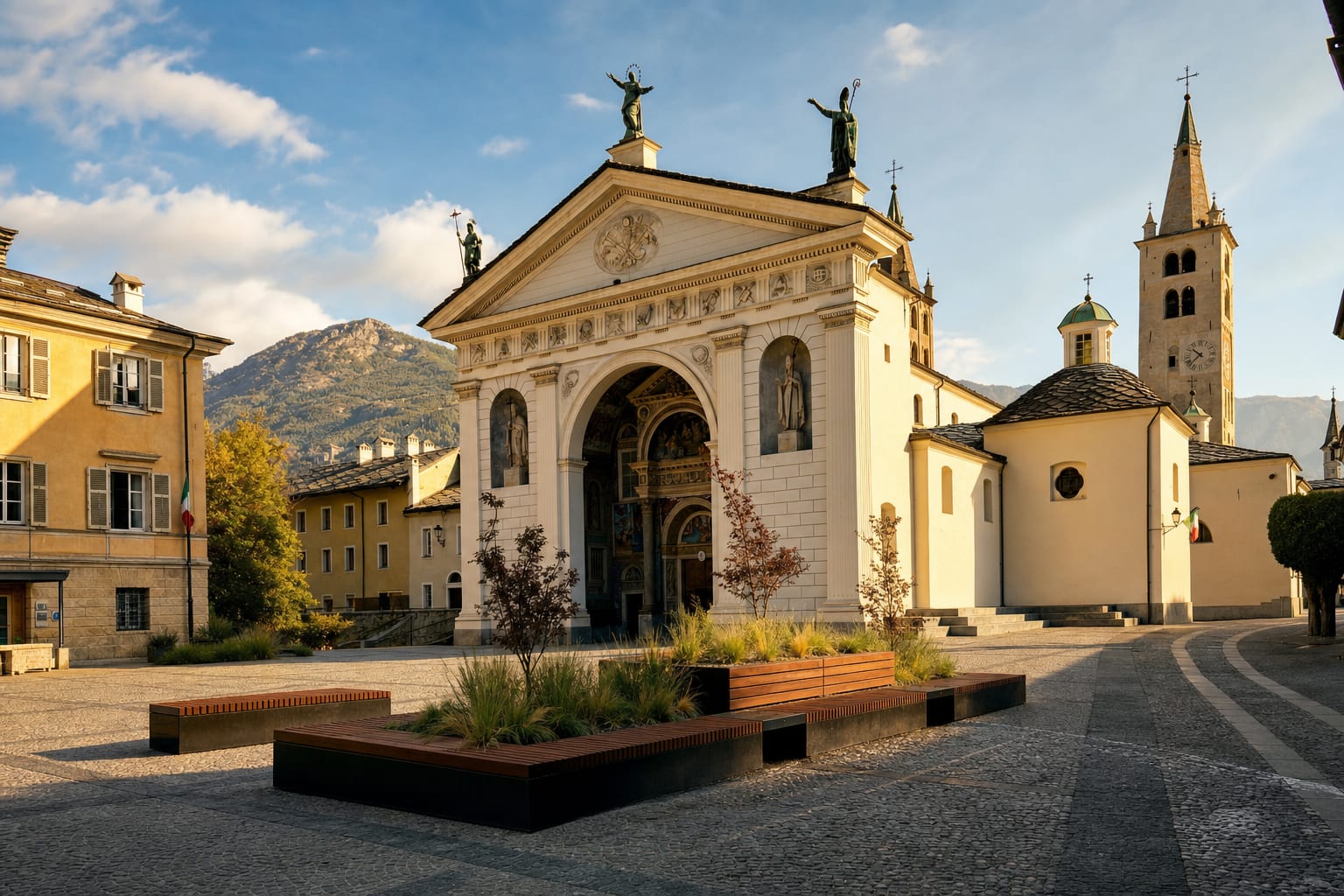
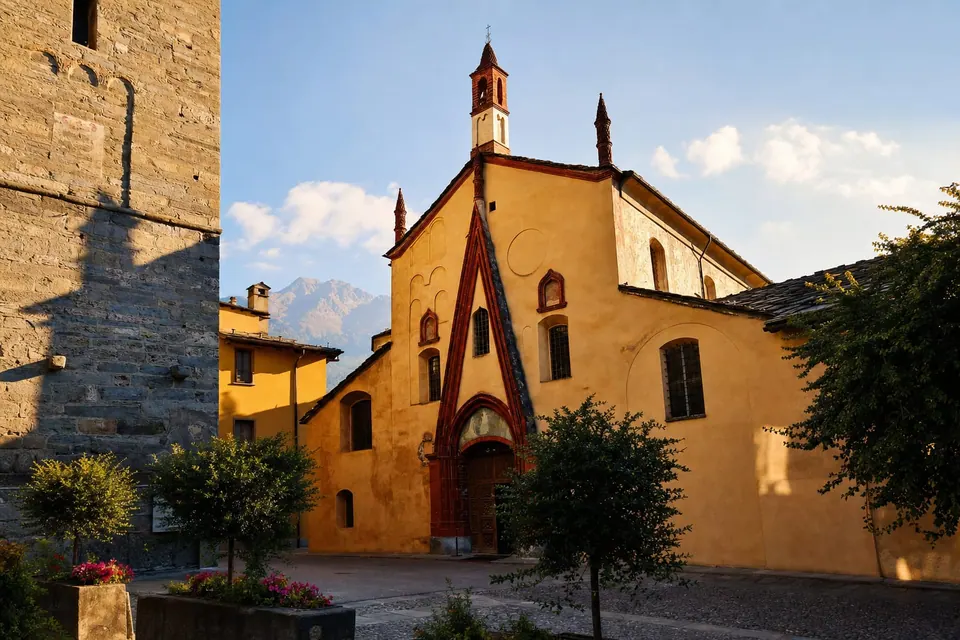
Aosta's Sant'Orso priory, famed for its Romanesque cloister capitals and hidden Ottonian frescoes.

  • Aosta
  • Church
Where
Aosta
Best for
Romanesque cloister capitals
Allow
1 hour
Tickets
Free

A thousand years of Valdostan art gather around the Romanesque cloister of the priory of Sant'Orso in Aosta, where thirty-seven of an original fifty-two marble capitals survive, carved with biblical scenes and grotesque beasts and coated long ago in a translucent, ash-flecked sealant that darkened them into their present bronze color.

Bishop Anselmo I rebuilt the church on an early Christian foundation between 994 and 1026, and later centuries added Gothic vaulting and a 44-meter bell tower whose largest bell, cast in France in 1589 and weighing nearly 2,800 kilograms, remains the biggest in the Aosta Valley. Rare Ottonian frescoes, painted before the Romanesque rebuilding, survive hidden in the attic space above the nave vaults, reachable only on specific guided visits.
Five things worth finding

If you see nothing else, see these.

  1. The Romanesque cloister capitalsRomanesque sculptors, after 1133

    Thirty-seven of the original fifty-two white marble capitals survive, with biblical scenes and grotesque beasts. A translucent, ash-flecked sealant applied long ago has darkened them to bronze.Cloister

  2. The Ottonian frescoesLombard workshop, mid-11th century

    Painted before the Romanesque rebuilding and kept hidden in the attic space. Rare in Italy and reachable only on specific guided visits.In the space between the roof and the vaults of the nave

  3. The carved choir stallsLate Gothic workshop, c. 1487

    Fine Gothic woodwork with detailed carving, among the best in the Aosta Valley.Choir

  4. The 12th-century mosaicRomanesque, 12th century

    A square carpet of black and white tesserae, about three meters on a side, uncovered in excavations at the end of the 1990s.Below the floor level of the church

  5. The bell tower and its great bellRomanesque tower, 12th century; bell cast in France in 1589

    A 44-meter tower with stacked mullioned windows. Its largest bell weighs nearly 2,800 kilograms and is the biggest in the Aosta Valley.Isolated on the church square

Plan your visit

Everything you need before you go.

Tickets
Free
Booking
No booking needed
Time needed
1 hour
Best time
A weekday morning, checking locally for any scheduled attic-fresco openings
Getting there
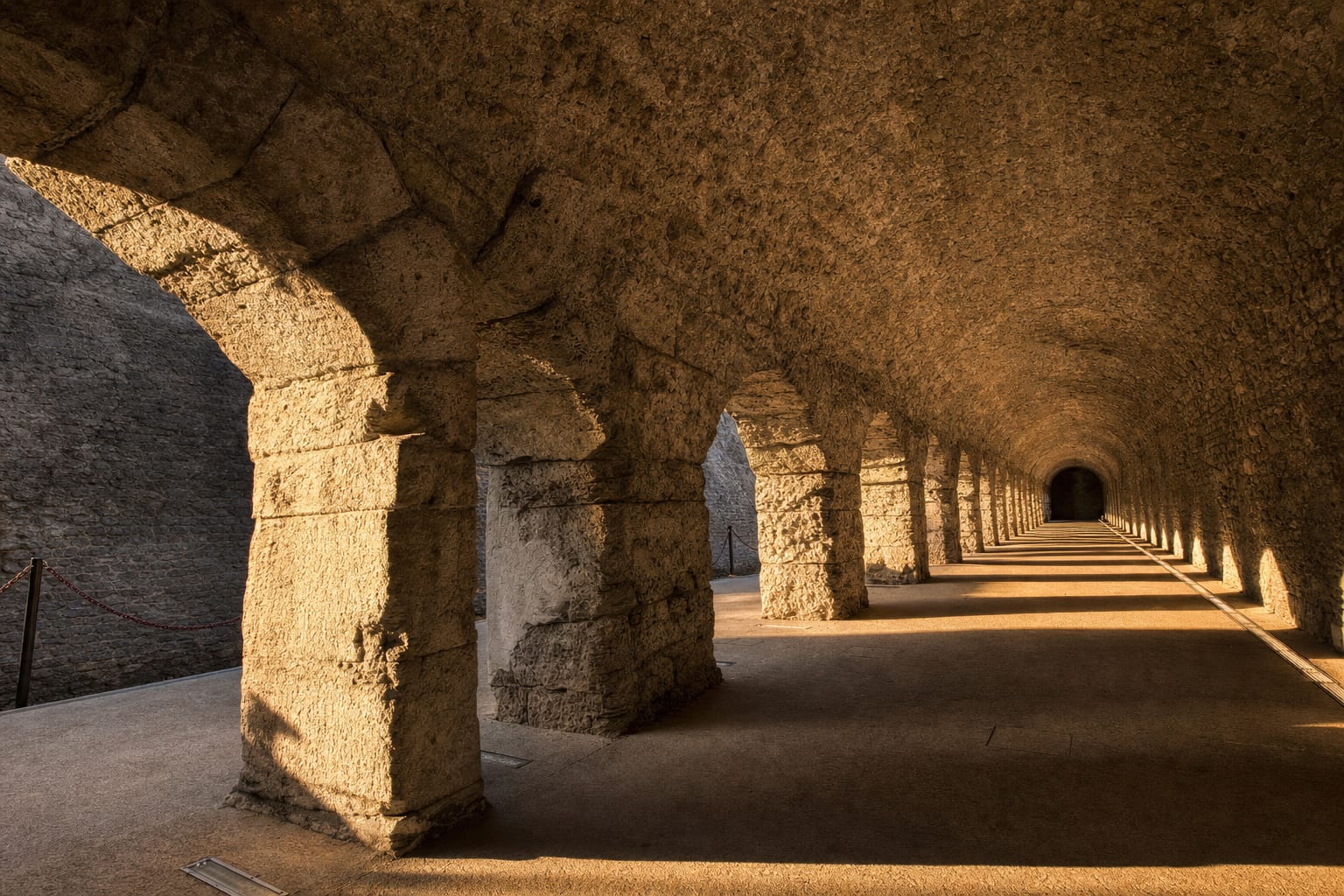
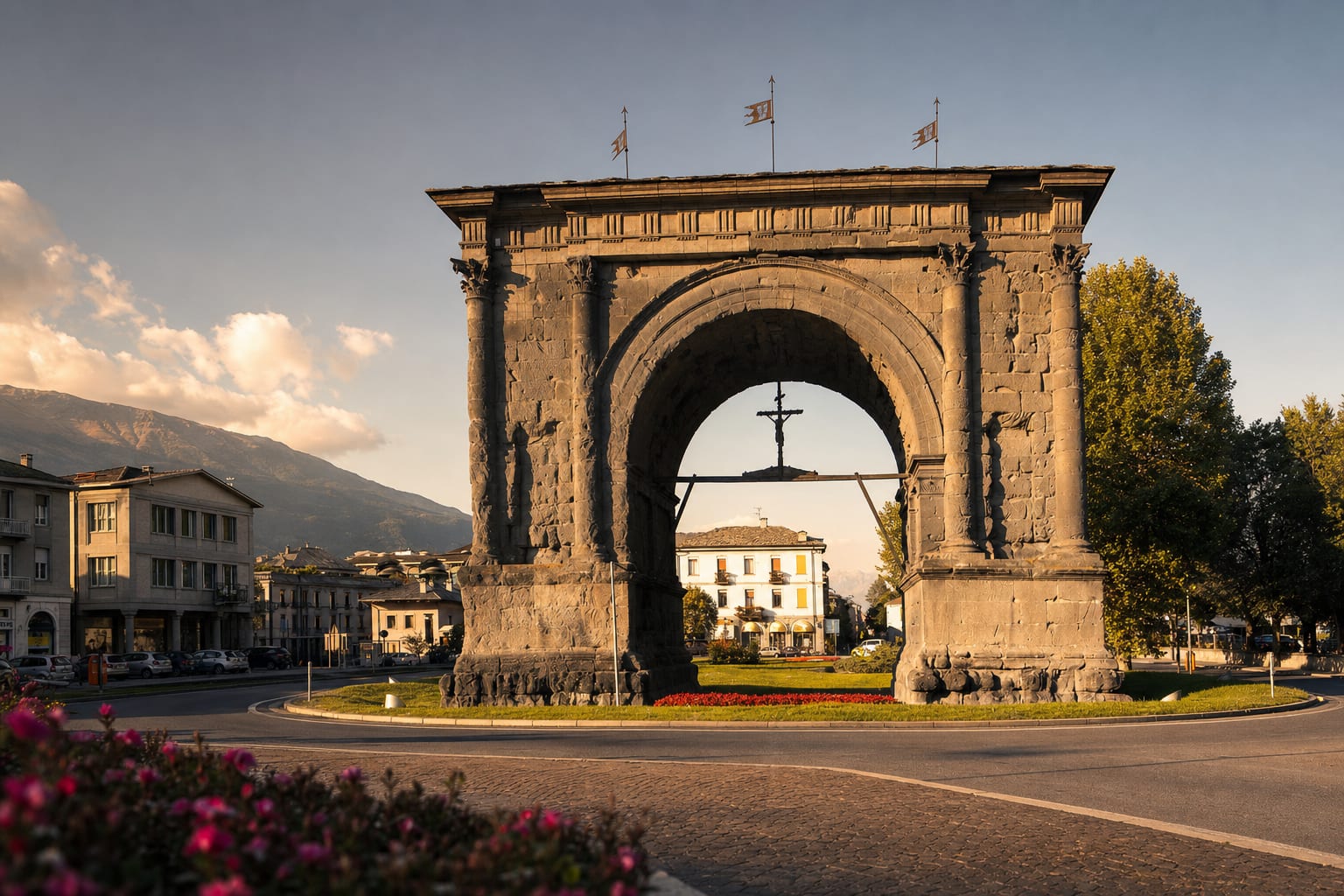
A short walk east of central Aosta, near the Roman-era Porta Praetoria; local buses also stop nearby.

The nave and cloister are normally free to visit; the attic frescoes and treasury are shown only during events organized by the Associazione Chiese Aperte, sometimes for a fee.

Time your visit around a guided opening of the attic: seeing the Ottonian frescoes above the vaults is worth planning around, since they are not normally on view.

Get directionsGoogle MapsApple Maps

Good to know

How long should you spend at the Collegiate Church of Sant’Orso?

About an hour covers the church, the cloister capitals and a walk around the square with the bell tower. If you can time a guided visit to the attic frescoes, add a little more.

Can you see the Ottonian frescoes at Sant’Orso?

Only on specific guided visits, because they sit in the attic space above the nave vaults. Ask locally or at the Aosta tourist office about the next scheduled opening. They are rare Ottonian-era frescoes, so worth planning around.

Can you see Sant’Orso and the Roman sites of Aosta in one day?

Yes, they are in the same compact town. Sant’Orso lies a short walk east of the center near the Roman Porta Praetoria, so pair the church with the Roman theater and the arch. Do the church in the morning, when the cloister light is best.

A letter from Italy, once a month.

The places, tables and makers we found worth your time. One email, no noise.

One letter a month. Unsubscribe at any time. We never share your address.

Help us get it right

What is it about?