Skip to content

Civita di Bagnoregio

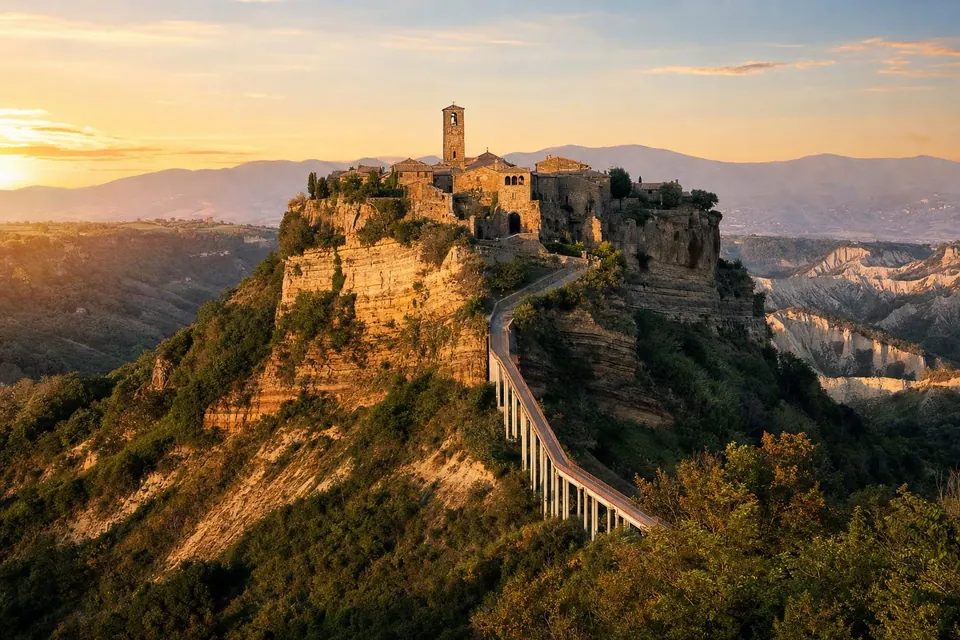
An Etruscan tuff-top village reached only by a long footbridge, slowly eroding into the badlands.

  • Bagnoregio
  • District
Where
Bagnoregio
Best for
Footbridge access
Allow
2 hours
Tickets
From €5
Checked September 2026

Etruscans laid out Civita on a plateau of soft volcanic tuff more than 2,500 years ago, and the badlands around it have been eroding ever since, earning the village its nickname the dying town.

Saint Bonaventure was born here, and after a major earthquake in the seventeenth century the bishop and town government moved to Bagnoregio, leaving Civita’s medieval and Renaissance houses to empty over the following centuries. Today the only way in is a reinforced-concrete footbridge built in 1965, and only a handful of residents remain. Cats sleep in doorways, a few restaurants serve local dishes, and the crumbling drop on either side of the bridge is much of the point of coming.
Four things worth finding

If you see nothing else, see these.

  1. Porta Santa Maria

    The gate is carved with two lions holding a human head, recalling a popular revolt. It is the first real thing you see after the bridge.Main gate at the top of the footbridge

  2. Piazza San Donato and the church of San Donato

    The village’s small main square sits in front of the church, which keeps a wooden crucifix much venerated locally.Main square at the center of the village

  3. The Etruscan tunnel (Bucaione)

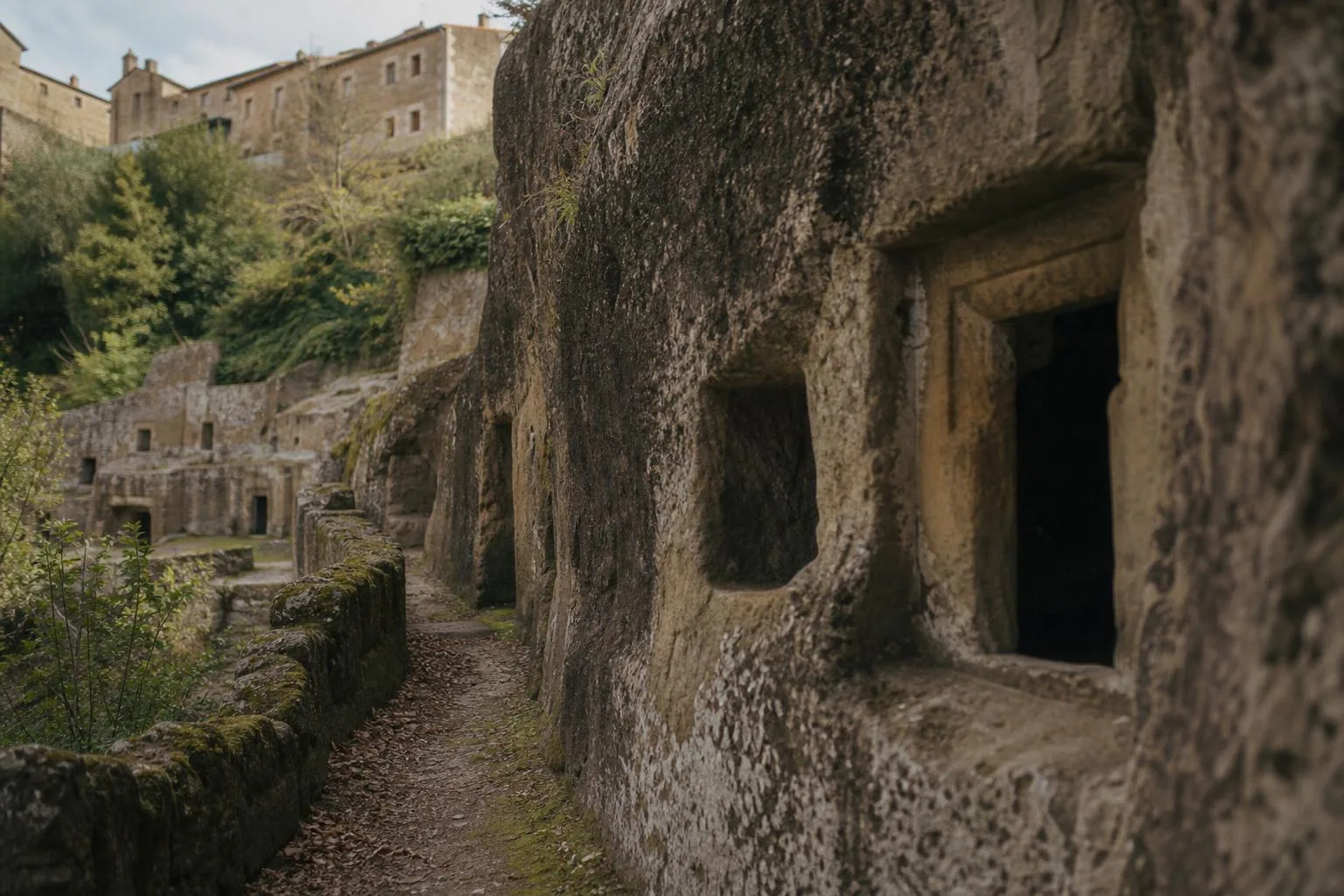
    An old passage cut through the rock that links Civita with the valley below, a rare surviving piece of Etruscan engineering.Below the village, on the side toward the badlands

  4. Geological and Landslides Museum

    A small museum that explains why the plateau is crumbling. It turns the views into something you understand.Palazzo Alemanni

Plan your visit

Everything you need before you go.

Tickets
From €5
Booking
No booking needed
Time needed
2 hours
Best time
Early morning or after sunset, when day-trippers thin out
Getting there
Drive or take a bus to Bagnoregio, where car parks and the ticket office sit at the start of the footbridge, then walk the roughly 300-meter footbridge uphill into Civita. There is no vehicle access to the village itself.
Accessibility
The footbridge is a steady uphill climb of several hundred meters and the village lanes are cobbled and uneven; it is not practical for wheelchair users.

The fee is charged to cross the footbridge, the only access. Free for children up to 6, visitors with disabilities and a companion, residents, and guests staying overnight in the village. Last updated September 2026. Prices change, so check the official site before you go.

Stay for dinner, or better, overnight: guests sleeping in the village skip the toll, and once the last coach groups cross back before dusk, Civita empties to almost nobody.

Get directionsGoogle MapsApple Maps

Good to know

How long should you spend in Civita di Bagnoregio?

Plan on about two hours, including the walk across the bridge, the village and a stop at a belvedere. It can be done in less, but the slow walk and lunch are part of the pleasure.

Is Civita di Bagnoregio worth visiting?

Yes, as a hidden gem it is hard to beat: a village that looks suspended between earth and sky. Go early or late to avoid day-trippers.

Do you need to book Civita di Bagnoregio?

There is usually an entry fee to cross the bridge, and in busy periods access can be regulated. Check the day before, and if you plan to eat in the village, book a table ahead.

A letter from Italy, once a month.

The places, tables and makers we found worth your time. One email, no noise.

One letter a month. Unsubscribe at any time. We never share your address.

Help us get it right

What is it about?