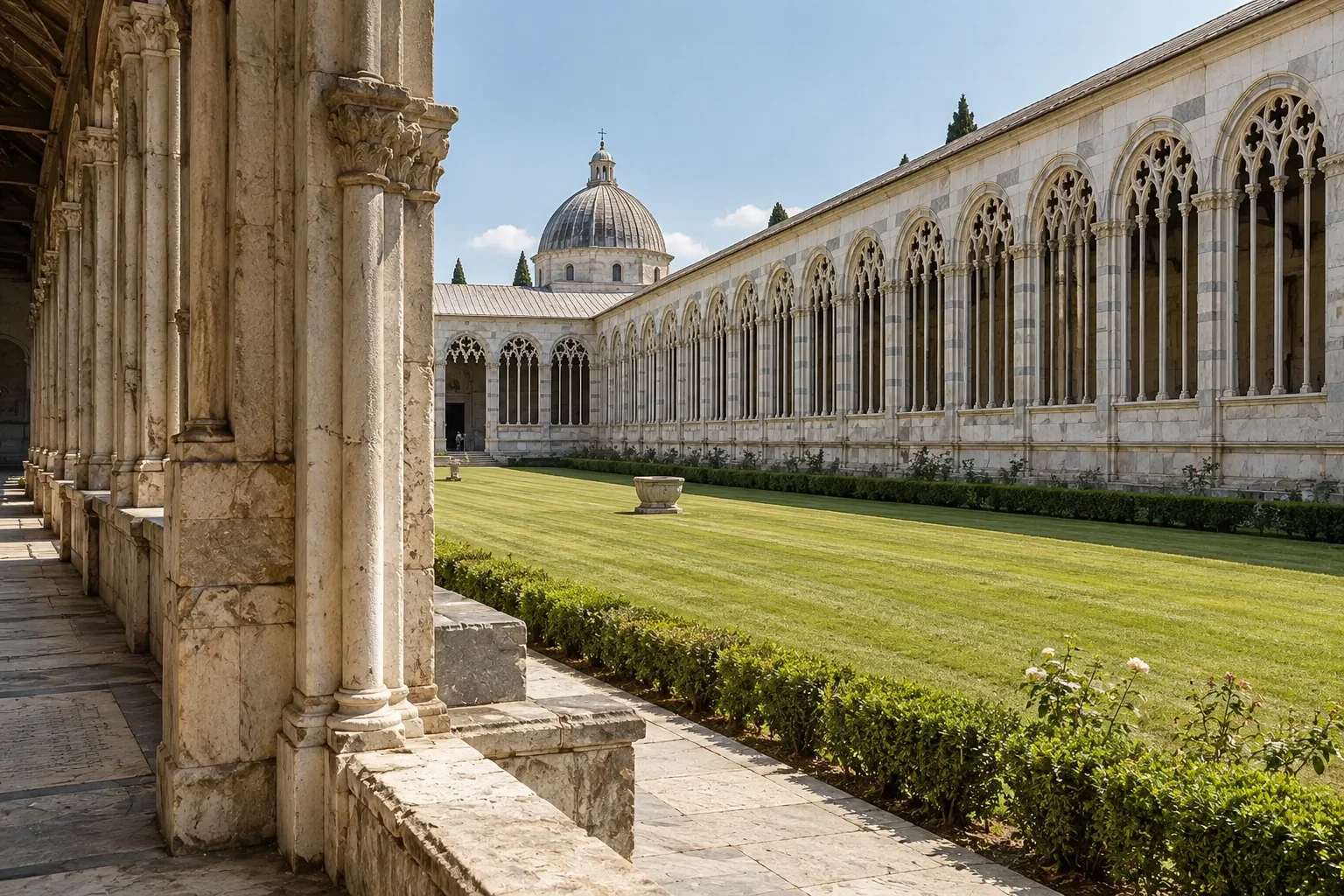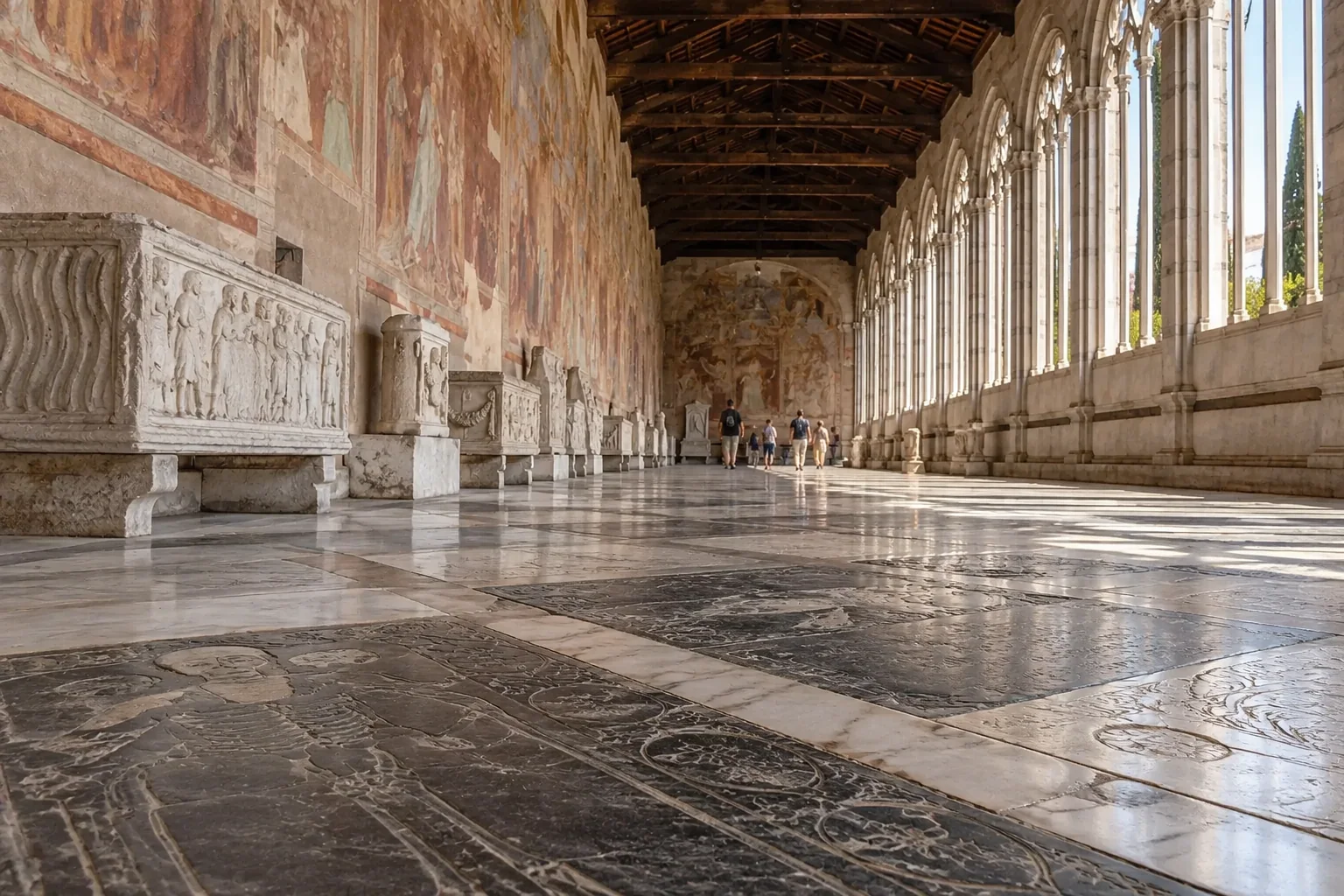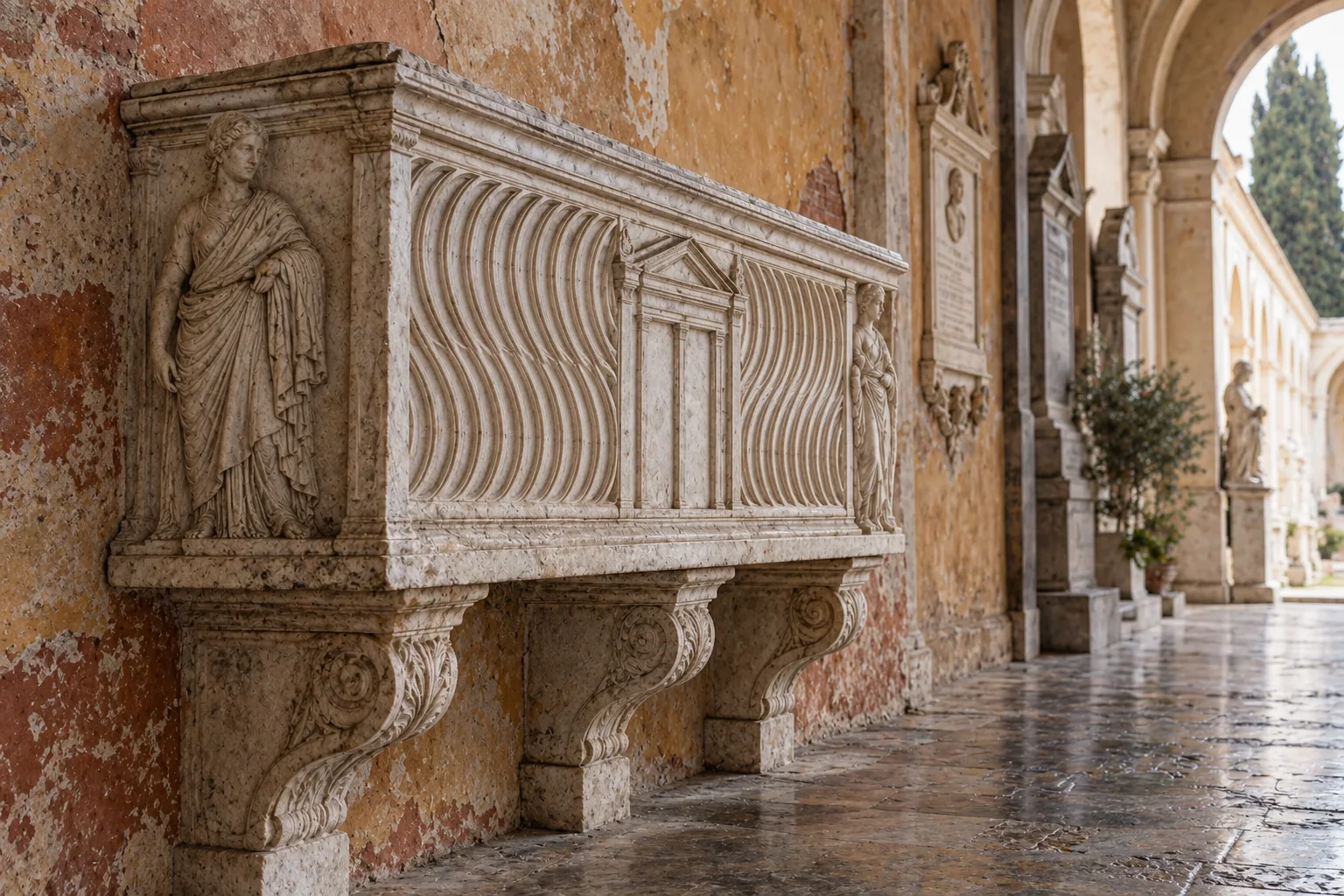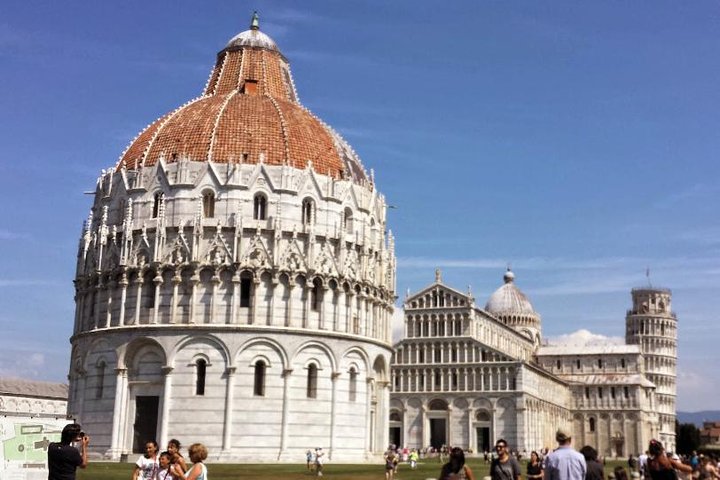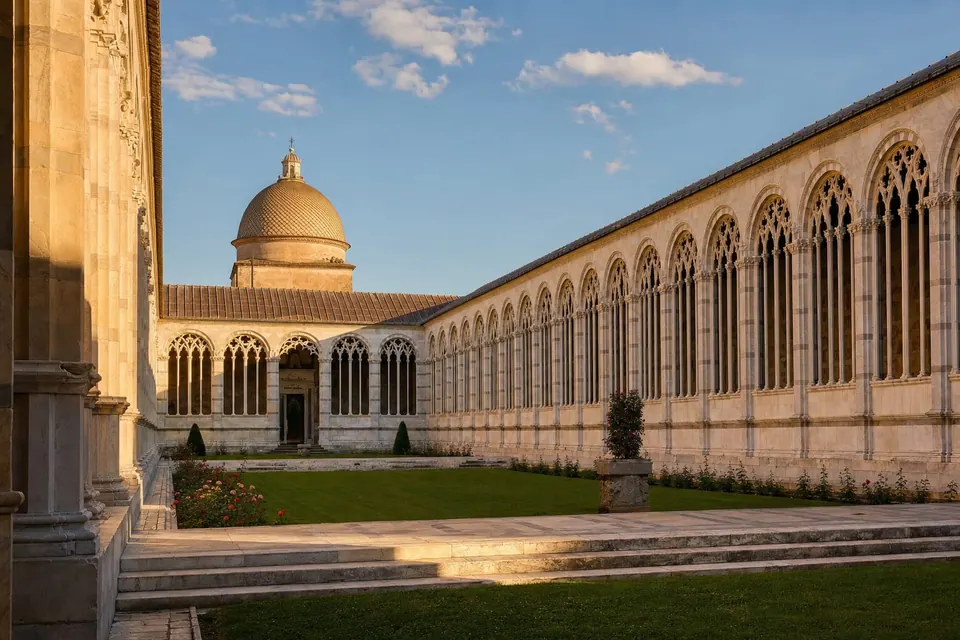
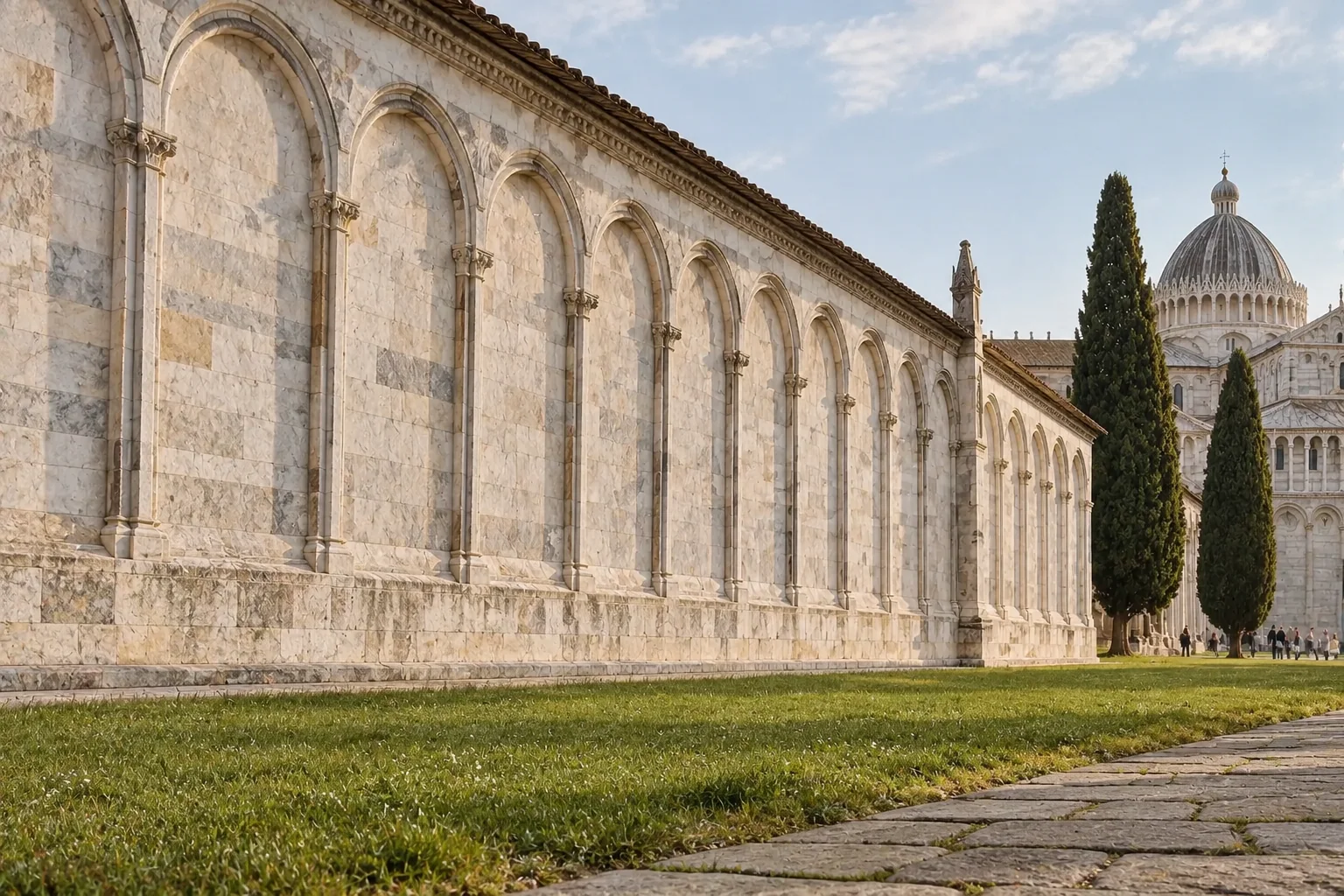
Camposanto Monumentale is the long, marble-walled cemetery that closes the north side of Pisa's Piazza dei Miracoli, built from 1277 by Giovanni di Simone to gather graves that had previously been scattered loose around the cathedral. Legend holds its inner earth was shipped from Golgotha during the Crusades, which made burial here especially prized among medieval Pisans. Its cloistered galleries once held one of Italy's great fresco cycles, including Buonamico Buffalmacco's harrowing Triumph of Death and Last Judgment, painted after the Black Death of 1348. A bombing raid in 1944 set the roof on fire, melting lead and badly damaging the frescoes; the disaster inadvertently revealed the underdrawings, called sinopie, preserved beneath and now displayed in a dedicated museum next door, a rare case where wartime destruction uncovered a whole new layer of art history.
Founded in 1277 for graves previously scattered around Pisa Cathedral, Camposanto developed a major fresco cycle. The 1944 air raid and fire began the recovery work that exposed the sinopie now held at the separate Sinopie Museum.
Sources and citations (3)
- Opera della Primaziale PisanaCamposantoRead source
- Comune di PisaPiazza del DuomoCamposanto fresco cyclesRead source
- UNESCO World Heritage CentrePiazza del Duomo, PisaRead source