

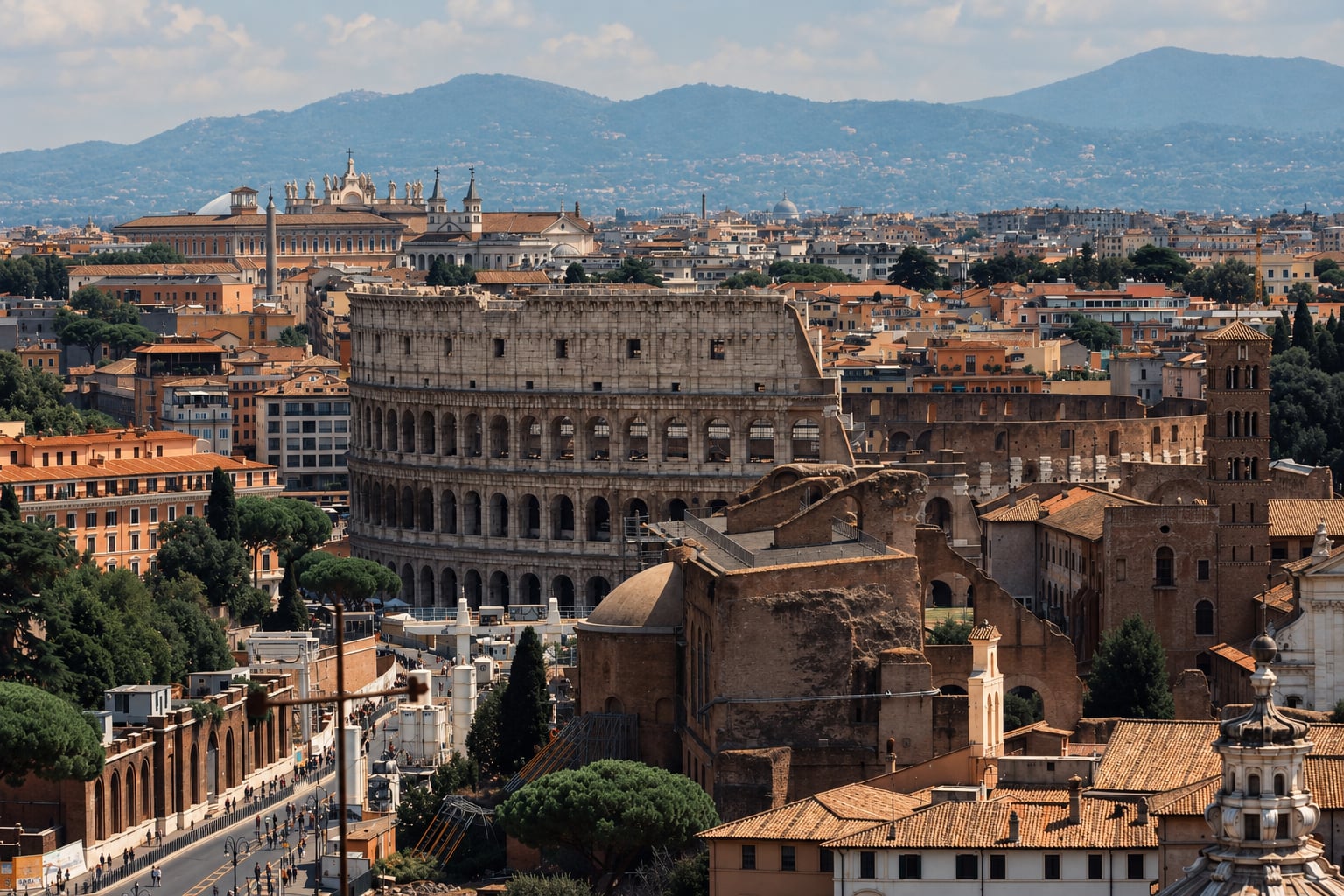
When to visit Lazio
Typical climate in Rome, the regional capital.
Month by month
- Jan
- mild but cool
- Feb
- cool with occasional rain
- Mar
- mild spring weather
- Apr
- pleasant spring
- May
- warm and sunny
- Jun
- hot and sunny
- Jul
- very hot
- Aug
- hot and humid
- Sep
- warm and pleasant
- Oct
- mild autumn
- Nov
- cool and rainy
- Dec
- cool winter
The short version
For Lazio, aim for April to June or September to October. These are the windows when Rome is warm but not punishing, the Castelli Romani hill towns are green and full of festivals, and the coast near Sperlonga and Gaeta is comfortable for swimming without the August chaos. Late April, May, and the back half of September are the sweet spots: long sunny days, manageable crowds, and prices that haven't hit their peak.
Summer (July and August) is hot, busy, and, around Ferragosto in mid-August, oddly empty as Romans leave town and neighborhood spots shut. It works if you want beach time and don't mind the heat. Winter is mild and rainy, good for budget travelers and museum lovers who'll trade gray skies for short lines. Spring and fall suit almost everyone: sightseers, food travelers, families, and anyone combining Rome with day trips to the lakes and hill towns.
Spring (March to May)
Spring is when Lazio comes back to life, and it's one of the two best times to be here. Early March can still be cool and damp, with Rome highs around 16°C (61°F) and the odd rainy stretch, but by late April and May you'll get long runs of sun, highs climbing into the low 20s°C (low 70s°F), and the city's gardens and the green hills of the Castelli Romani at their best. The light is soft, the umbrella pines pop against blue skies, and outdoor cafe tables fill up again.
The tradeoff is that everyone else has the same idea. Easter week is one of the busiest stretches of the entire year in Rome, with Vatican crowds at full volume, so book accommodation and major monuments well ahead and don't arrive unprepared that week. Pack layers, because mornings and evenings are still cool and a passing shower is normal. The sea is warming but not yet swimmable, so treat spring as a city-and-hill-towns season. If your trip runs into the second week of June, the Infiorata di Genzano (tied to Corpus Domini, June 13 to 15 in 2026) carpets an entire street in pictures made of flower petals, one of the great spectacles of the Castelli Romani.
Summer (June to August)
Summer in Lazio splits in two. June is genuinely lovely: warm, sunny, days are long, the sea has warmed up enough to swim, and the crowds haven't yet peaked. July and August are a different story. Rome highs average around 30 to 31°C (86 to 88°F) and regularly push past 35°C (95°F) in heat waves, and the city's stone and asphalt hold the heat well into the night. Sightseeing means starting early, hiding indoors at midday, and drinking far more water than you think you need.
Mid-August is its own thing. Around Ferragosto (August 15), Romans leave for the coast and mountains, and a lot of neighborhood restaurants and small shops simply close for a week or two. The upside is that the historic center feels strangely calm and lines at the big monuments shrink; the downside is that some of the best local places are shuttered, and the Vatican Museums close on August 15 (and usually August 16). If you come in deep summer, lean into the coast: Sperlonga, Gaeta, and the Pontine islands have sea temperatures around 24 to 26°C (75 to 79°F), the most swimmable water of the year.
Autumn (September to October)
Autumn is the other prime window, and many regulars quietly prefer it to spring. September still feels like summer with the edges sanded off: warm days, highs in the mid-to-high 20s°C (high 70s to low 80s°F), and a sea that stays comfortable for swimming through much of the month, often around 24 to 25°C (75 to 77°F). Crowds thin after the August rush, the light turns golden, and the harvest brings food into focus. October cools gently, with more rain creeping in toward month's end and sea temperatures sliding toward 21 to 22°C (70 to 72°F), but it stays one of the most pleasant times to walk Rome.
This is the season for the Castelli Romani. The grape harvest fuels a string of sagre, capped by the Sagra dell'Uva in Marino on the first Sunday of October, when the town's Fountain of the Moors famously runs with white wine in the late afternoon. You'll find new-wine tastings, porchetta in Ariccia, and chestnuts and mushrooms on menus everywhere. Pack a light layer for cooler evenings and a small umbrella for October, but otherwise September and early-to-mid October are about as good as Lazio gets.
Winter (November to February)
Winter in Lazio is mild by North American standards but genuinely wet. Expect Rome highs around 12 to 13°C (54 to 55°F), nighttime lows near 4°C (39°F), gray skies, and the region's rainiest stretch from November through January. It rarely snows in the city, though the higher Apennine towns inland can get a dusting. This is low season, which is exactly the point: hotel rates drop, restaurants have tables, and you can stand in front of the Trevi Fountain or walk the Forum without fighting a crowd.
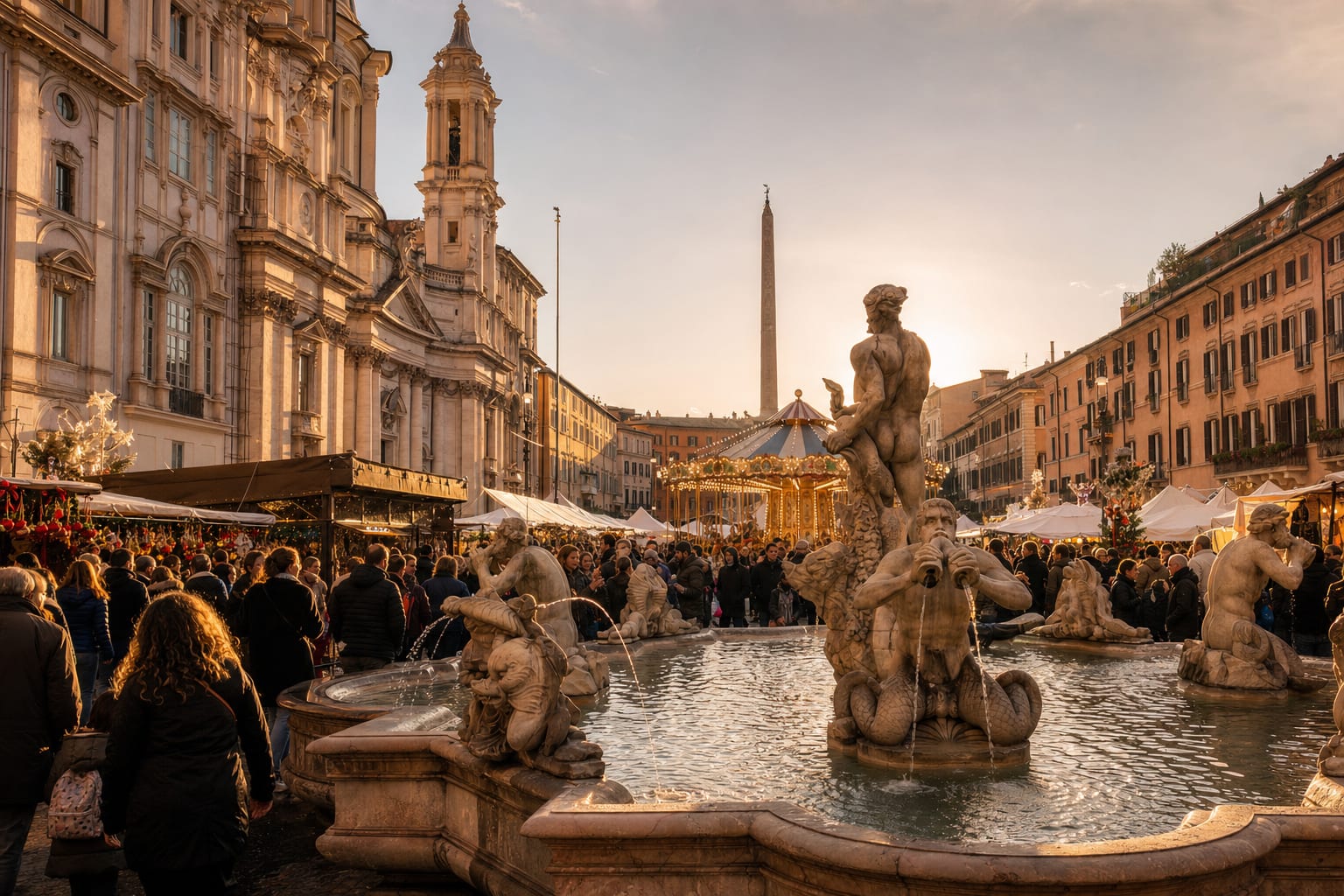
If you don't mind layering up and carrying an umbrella, winter rewards museum and church lovers, who get the Vatican and Borghese with far shorter waits. Christmas and New Year bring a festive surge and a brief price bump, with nativity scenes across the churches and a holiday buzz in the center, so book around those dates. The coast and hill towns are quiet and many seasonal spots are closed, so treat winter as a Rome-focused, indoor-leaning trip with the occasional crisp, sunny day for walking.
Weather, by the part of Lazio
Lazio packs several microclimates into a compact region. Rome and the lowland interior get the classic Mediterranean pattern: hot, sometimes muggy summers and mild, rainy winters, with the city's mass of stone trapping summer heat after dark. The Tyrrhenian coast (Sperlonga, Gaeta, Anzio, the Pontine islands) runs a touch milder and breezier, with sea temperatures that make swimming comfortable from roughly late May into October and warmest, around 24 to 26°C (75 to 79°F), in July and August.
Head inland and up and the picture changes. The Castelli Romani, the volcanic hills just southeast of Rome around lakes Albano and Nemi, sit a few degrees cooler than the city, which is exactly why Romans have always retreated there in summer. Push further to the Apennine highlands and the mountains near Rieti and you get real winter: colder temperatures, more rain, and occasional snow, with cool relief in the hottest months. The simple rule is that for summer, the coast and the hills beat the city, and for winter, Rome's lowland mildness beats the mountains.
Insider timing
Target the shoulder weeks. The first half of May and the back half of September hit the best balance of warm weather, swimmable-or-nearly sea, and crowds that haven't peaked, with prices below the July and Easter highs. Early June and early October are close runners-up. If your trip is Rome-heavy, weekdays beat weekends at the major monuments, and booking timed-entry tickets for the Vatican Museums, Colosseum, and Borghese Gallery in advance is non-negotiable in any season except winter.
Avoid landing in Rome around Ferragosto (August 15) unless the coast is your real target: the heat is at its worst, the Vatican Museums close on the 15th (and usually the 16th), and many of the best neighborhood restaurants take their annual break. Easter week is the other crush to plan around. Two small moves pay off all year: start sightseeing early to beat both heat and lines, and build in a day trip to the Castelli Romani or a lake town, which is most rewarding during the autumn sagre season but pleasant any time the weather is fair.