

When to visit Friuli-Venezia Giulia
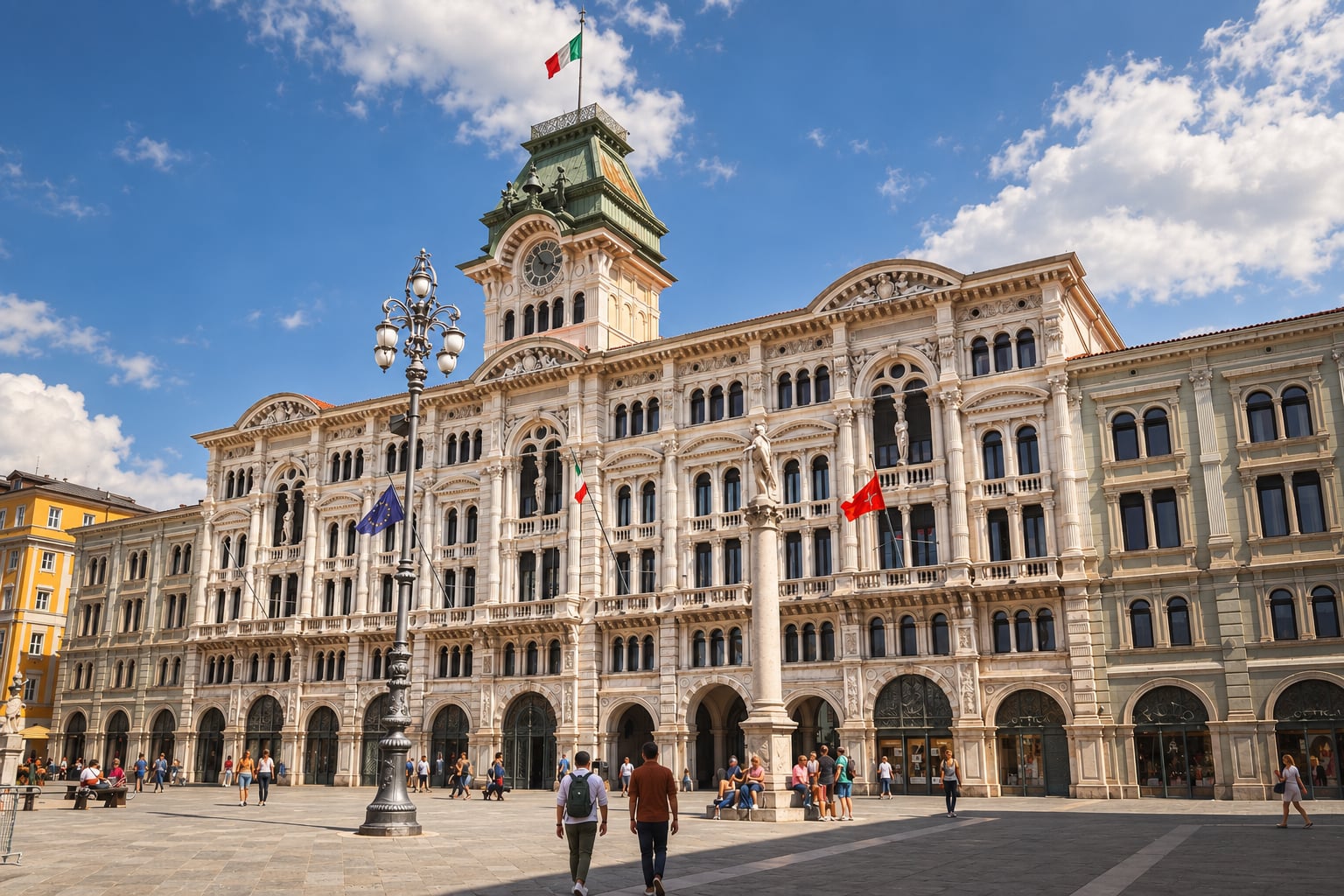
Typical climate in Trieste, the regional capital.
The short version
Come in May into June, or in September. These are the months when Trieste is pleasant rather than muggy, the Adriatic at Grado and Lignano is warm enough to swim, the vineyards on the Friulian plain are green and busy, and you can walk the cities without fighting a crowd. May and June give you long, mild days and the lowest odds of real heat. September pairs reliable warmth with the start of grape harvest, when the wine towns come alive and the cooking gets serious.
July and August work if your main goal is the beach, but expect humid heat and full coastal resorts. Autumn, from mid-September into October, is the season for wine, food, and Trieste's famous Barcolana regatta. Winter is quiet, often cold, and ruled by the bora, the fierce northeast wind that funnels down onto the gulf. Save it for the ski slopes of the Carnic and Julian Alps or a cozy city break in Trieste's grand Habsburg cafes.
Spring (March to May)
Early spring here is a slow thaw. March can still feel raw, especially when the bora wind funnels down off the Carso plateau into Trieste, dropping the temperature and rattling the seafront. April warms unevenly, with daytime highs around 16C (low 60s F), and brings the first green to the Collio and Colli Orientali wine hills. It is a good time for the cities, the castles, and the vineyards, though the sea is still cold and a packed jacket earns its place.
By May the region hits its stride. Highs climb into the low 20s C (low 70s F), days are mostly settled, gardens and hillsides are at their freshest, and the crowds have not arrived. The Adriatic is warming but still on the cool side for most people, so think walking, cycling the plain, and long lunches rather than beach days. Late May into June is one of the two best windows of the whole year, with reliable sun, comfortable temperatures, and restaurant tables you do not need to fight for.
Summer (June to August)
June is the gentle end of summer here, still warm rather than hot, with the sea finally crossing into comfortable swimming range (around 22C, low 70s F) by the back half of the month. The beaches at Grado and Lignano Sabbiadoro are open and lively without being overrun, and the cities stay walkable. If you want summer warmth without the worst of the crowds, aim for June.
July and August are hot and humid, with Trieste highs around 27C (low 80s F) and sticky evenings, broken now and then by an afternoon thunderstorm. August is the warmest month, and the coast fills with Italian and Central European holidaymakers as prices climb. The Ferragosto stretch around August 15 brings packed beaches alongside shuttered shops and restaurants in the inland towns. The sea is at its warmest now, roughly 25 to 26C (high 70s F), so high summer makes sense mainly if the beach is the whole point of your trip.
Autumn (September to November)
September is the region's other great month. The heat eases into warm, clear days, the sea stays swimmable into early autumn, and the grape harvest brings the wine country to life. Mid-month, Udine throws Friuli Doc, the big regional food and wine festival, usually over four days around the second weekend of September. You can taste the local whites (Friulano and Ribolla Gialla), the red Refosco, San Daniele prosciutto, and aged Montasio cheese in the squares of the old town. You get summer's warmth with thinner crowds and a calendar full of reasons to be here.
October keeps things mild and turns the wine hills gold, and it delivers Trieste's signature event, the Barcolana regatta on the second Sunday of the month. Billed as the world's largest sailing race, it packs thousands of boats into the gulf and fills the city with crews and spectators. Book months ahead if you want that weekend. By November the weather turns cool and wetter, the beaches shut down, and the bora starts making itself known again, though the cities and their warm cafes stay rewarding.
Winter (December to February)
Winter on the coast is cold by Italian standards and defined by the bora, the dry northeast wind that channels down to the Gulf of Trieste. Strong episodes routinely bring gusts over 100 km/h (60 mph), and gale-force bora can top 150 km/h, with the city's record above 180 km/h. When it blows hard, the seafront is genuinely punishing and the temperature can drop below freezing. Between bora episodes, Trieste turns crisp and sunny, and its grand Habsburg-era cafes are at their best with a hot drink and a slice of something Central European.
Head inland and up, and winter becomes a feature rather than a problem. The Carnic and Julian Alps get real snow, and resorts like Tarvisio, Sella Nevea, and Forni di Sopra draw skiers from Italy, Austria, and Slovenia from December into late March (Sella Nevea usually holds snow the longest, often to Easter). December also brings Christmas markets with a distinctly Central European flavor. This is the season for snow and atmosphere, not for the coast or the vineyards, both of which are largely dormant.
Weather, by the part of Friuli-Venezia Giulia
This is a small region with surprising range. The Adriatic coast (Trieste, Grado, Lignano) is the mildest part, with warm humid summers and cool winters, but it is uniquely exposed to the bora, which can make a sunny winter day feel arctic in Trieste while it stays calm just inland. The Friulian plain, home to San Daniele prosciutto and a sea of white-wine vineyards, runs hot and humid in summer and foggy and cold in winter, with a wide gap between July highs and January lows.
Climb north and the picture changes fast. The wine hills of the Collio and Colli Orientali near the Slovenian border get a gentle, vine-friendly climate, a touch cooler and wetter than the plain. Beyond them, the Carnic and Julian Alps are properly alpine: cool even in summer, snowy and cold all winter, and among the wettest corners of Italy. The short version is that what you pack and when you go should depend on whether you are aiming for the beach, the plain, the wine hills, or the mountains.
Insider timing
If you want one tip, target the last week of May into the first half of June, or the first three weeks of September. Both give you warmth, manageable crowds, open restaurants, and fair prices, and September adds the harvest energy. Avoid the Ferragosto window around August 15, when the coast is jammed, the inland towns half-close, and you get the worst value of the year. If a beach holiday is the goal, June and early September beat July and August on every measure except guaranteed sea heat.
Two events are worth planning around rather than stumbling into. The Barcolana on the second Sunday of October fills Trieste and its hotels, so book months ahead if you want it, or steer clear of that exact weekend if you do not. Friuli Doc in Udine in mid-September is a fine reason to be in the wine country, but expect a busier Udine for those few days. And whenever you come in the colder half of the year, check the bora forecast before you commit to a day on the Trieste waterfront, because it changes everything.